
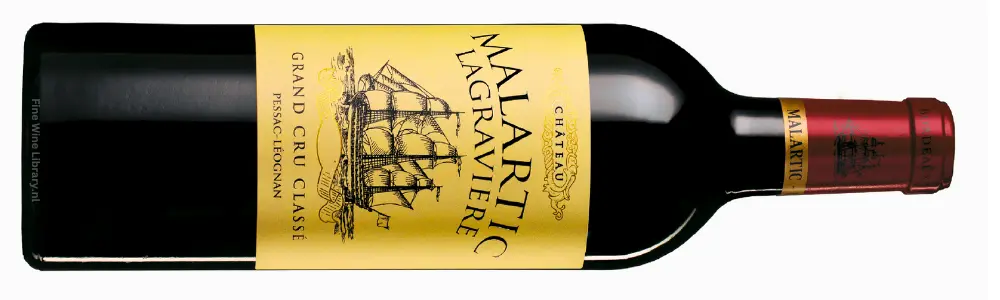
Chateau Malartic Lagraviere Rouge 2025
Flasche - 75cl
ETA: +2 Jahre
- Jahrgang2025
- FarbeRot
- ProduzentChateau Malartic Lagraviere
- LandFrankreich
- RegionBordeaux
- UnterregionPessac-Leognan
- BezeichnungAOP
- FlaschengrößeFlasche - 75cl
- Alkoholgehalt13.5
- LWIN10126772025
- Durchschn. Kritikerbewertung4.5★★★★★★★★★★
Weinkritiker-Bewertungen
The quality of the tannins shows through nicely, with black currants, orange peel, crushed stones and a hint of fresh herbs. It's medium-bodied with a creamy texture and lots of polish. Long, complete and succulent, with a touch of salt. A blend of 57.5% cabernet sauvignon, 39% merlot, 3% petit verdot and 0.5% cabernet franc
- Name des Kritikers: James Suckling
Bright cassis, graphite, candied violets, and exotic flower nuances all emerge from the 2025 Château Malartic-Lagravière, which checks in as a blend of 57.5% Cabernet Sauvignon, 39% Merlot, 3% Petit Verdot, and 0.5% Cabernet Franc, all of which is being raised in 50% new French oak. Medium to full-bodied on the palate, it has a pure, focused mouthfeel, fine, polished tannins, and a great finish. It's a beautiful, layered, pretty Pessac-Léognan with remarkable charm and character.
- Name des Kritikers: Jeb Dunnuck
Flowers, tobacco leaves, cigar box, dark cherries, blackberries and a touch of espresso create the perfume. On the palate, the wine is elegant, fresh, refined, and long. Everything is in balance, with a lingering finish that tastes as good as it feels. If you can wait, give it a few years of bottle age, and it should evolve for 2 decades with ease. The wine is a blend of 57.5% Cabernet Sauvignon, 39% Merlot, 3% Petit Verdot, and .5% Cabernet Franc. 13% ABV. Drink from 2029-2052.
- Name des Kritikers: Jeff Leve
Enjoyable, sappy, plenty of lift and dark fruit, incense and sandalwood, you can see the structure and shape of the tannins and it is very much a wine where the acidity is controlled, giving a really juicy mouthfeel, great energy, definition and precision. Excellent job. 38 hl/ha yield.
- Name des Kritikers: Jane Anson