
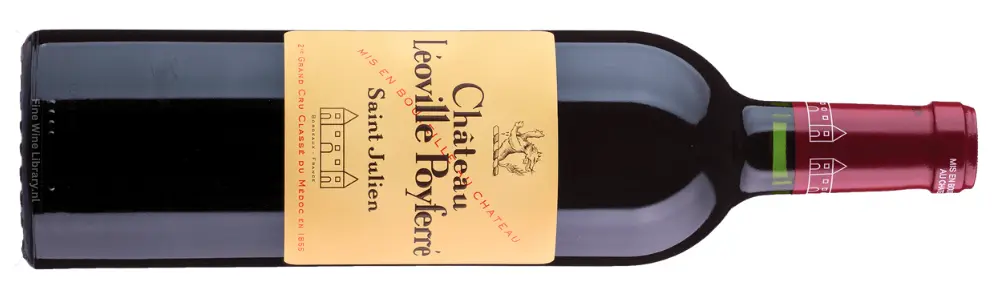
Chateau Leoville Poyferre 2025
Bouteille - 75cl
Date d'arrivée estimée : +2 ans
- Millésime2025
- CouleurRouge
- ProducteurChateau Leoville Poyferre
- PaysFrance
- RégionBordeaux
- Sous-RégionSaint-Julien
- AppellationAOP
- Format BouteilleBouteille - 75cl
- Degré d'alcool13.5
- LWIN10123872025
- Note Moyenne des Critiques4.6★★★★★★★★★★
Avis des critiques de vin
An extremely captivating Poyferré this year. Beautiful vivid and vibrant colour in the glass with soft rose and violets on the nose. Juicy and alive, immediately so charming, chewy, fleshy but cool and stony. Mouthfilling with licks of liquorice, tobacco, cola and hints of clove. I love the restraint on show – this is still a powerful wine but so much more relaxed than it could have been. Graceful yet impactful, full of ripe fruit with such a generous and happy attitude. I love it. Potential upscore in bottle. A yield of 20hl/ha, one of the smallest yields. Owner Sara spoke of lower fermentation temperatures, shorter macerations and shorter pumping-over to keep soft tannins. No deleafing, kept cover crops and used cold rooms to let grapes cool before optical sorting, especially for the more fragile Petit Verdot. Julien Viaud consultant. 5% Petit Verdot completes the blend.
- Nom du critique: Georgina Hindle
Deep dark ruby garnet, opaque core, violet reflections, delicate rim brightening. Fine precious wood, cherries, a hint of cassis and black berries, inviting bouquet. Juicy, elegant and well-balanced, fresh heart notes, ripe, melting tannins, sweet extract and long-lasting, sure development potential.
- Nom du critique: Peter Moser
Ripe, sexy amounts of red, black, and blue fruits, smoke, tobacco, and scorched earth all define the 2025 Château Léoville Poyferré, a blend of 61% Cabernet Sauvignon, 26% Merlot, 8% Cabernet Franc, and 5% Petit Verdot. It's full-bodied on the palate, with a round, layered, exuberant mouthfeel, plenty of velvety tannins, and ample mid-palate depth. It's a ripe, opulent, beautifully balanced 2025 in the making.
- Nom du critique: Jeb Dunnuck
Tobacco leaves, smoke, flowers, cherries, chocolate, licorice, currants, and espresso beans create the aromatic profile. The palate is even better with its lusciously-textured wealth of sweet, vibrant, and pure, red, with black fruits. There is freshness, vivacity, and creamy tannins which all go together creating a complete, and balanced wine. The finish meshes chocolate with currants, spice and herbs that start off strong, and keep on going. The wine blends 61% Cabernet Sauvignon, 26% Merlot, 8% Cabernet Franc, and 5% Petit Verdot. 13.5% ABV, 3.71 pH. Yields were only 20 hectoliters per hectare. Harvesting took place September 8 - September 23. Along with 2022, this is the earliest harvest in the history of the estate. The wine is aging in 80% new, French oak barrels. Drink from 2030-2065.
- Nom du critique: Jeff Leve
Luscious, fabulous construction and grip, a true slow unroll, with waves of orange peel minerality, cocoa bean and espresso, silky texture, great quality, squid ink, yield extremely low at around 20hl/ha but manages to retain an opulent drinkability once you give it time in the glass. An easy one to recommend, and this has so many hidden depths. Harvest September 8 to 23. 3.73 pH. 20.38 hl/ha. 80% new oak. 3.71 pH. Harvest September 8 to 23. Old vines at Poyferre naturally low yields, and with the dry summer, this was the first year since 2011 to do no saignee at all during fermentation because already such natural concentration.
- Nom du critique: Jane Anson
The 2025 Léoville-Poyferré was picked from September 8 to 23 at just 20.3 hl/ha, undergoing a six-day cold pre-fermentation maceration and matured in 80% new oak. This is quintessential Poyferré on the nose, quite sensual and pure in style, with layers of ripe black fruit, black plum, a hint of camphor and violet. Wonderful delineation. The palate is framed by fine tannins, beautifully balanced, again quite minerally in style, with a precise and persistent graphite-tinged finish. If you love Poyferré, then you are going to adore this.
- Nom du critique: Neal Martin