
July 19, 2026
The Ultimate Guide to South African Wine
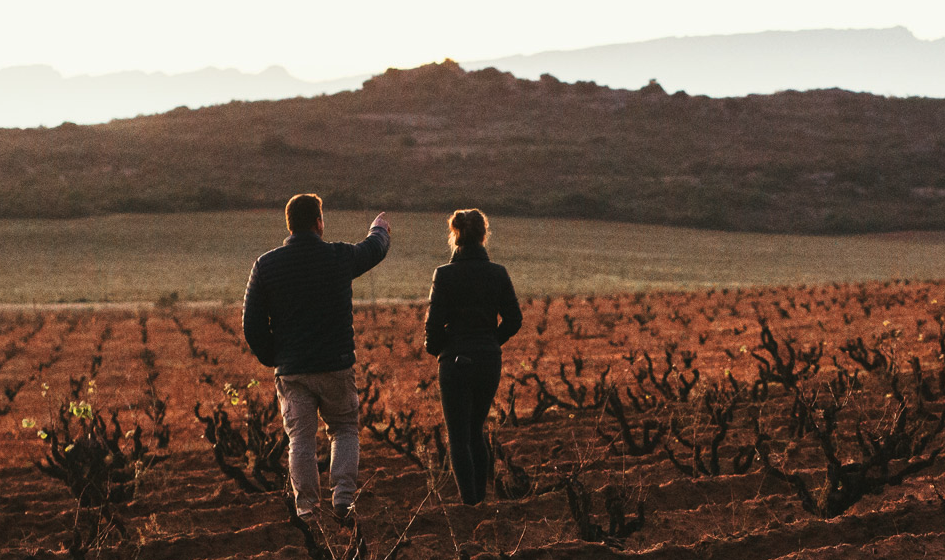
South Africa is the most exciting fine wine producing country in the world at this moment. No other region offers the combination of extraordinary old vine terroir, a philosophically driven generation of producers working at the peak of their powers, and prices that remain genuinely compelling relative to the quality in the glass. This guide is designed for collectors at every level, from those encountering South African wine for the first time to experienced buyers seeking to deepen their understanding of specific regions and producers.
It is organised to reflect the priorities of a serious collector: the Wine of Origin classification system that gives the Cape its structure, the grape varieties that define its most important wines, the regions where the finest bottles are produced, and the producers who are building the body of work that will be referenced by collectors for decades to come.
South Africa
South Africa's wine industry has one of the longest histories of any New World wine country, with the first vines planted by Governor Jan van Riebeeck in 1659 at the Cape Colony for the Dutch East India Company. Three and a half centuries of continuous viticulture have produced an accumulated depth of agricultural knowledge, old vine heritage and winemaking tradition that no other southern hemisphere wine country can match.
The Cape Winelands occupy the south-western tip of the African continent, within the Cape Floristic Region, one of the world's six recognised biodiversity hotspots. The vineyards are bounded by two oceans, the Atlantic to the west and the Indian to the east, both of which exercise a moderating influence on the growing season temperatures that would otherwise be prohibitively warm for fine wine production. The Benguela current, flowing northward from the Antarctic along the west coast, is the most direct and important of these cooling influences, making the maritime-adjacent wards of Hemel-en-Aarde Valley, Constantia and Elgin capable of producing wines of a delicacy and structural precision that surprises those who expect nothing but warmth from a southern African climate.
The diversity of terroir within a relatively compact area is extraordinary. The ancient soils of the Cape range from Precambrian granite, hundreds of millions of years old, through Bokkeveld shale formed from Devonian marine sediments to Malmsbury schist of ancient ocean floor origin. Each geological substrate produces wines of distinctly different character from the same grape varieties, and the most philosophically engaged Cape producers have made the communication of this terroir diversity the central project of their winemaking lives.
Understanding the Wine of Origin Classification
South Africa's Wine of Origin (WO) system is the formal classification framework for Cape wine production and geographical labelling, established in 1973 and progressively refined since. It divides the wine-producing areas into geographical units, regions, districts and wards of increasing specificity.
The principal geographical unit for collectors is the Western Cape, which encompasses the majority of the Cape's significant producers. Within the Western Cape, the Coastal Region is the most important collective designation, covering Stellenbosch, Swartland, Franschhoek, Paarl and Constantia among others. The Cape South Coast region covers the Hemel-en-Aarde Valley and Elgin. A wine labelled with a specific ward carries the strongest geographical guarantee of origin.
The Old Vine Project runs alongside the formal WO classification and has become one of the most important quality signals in South African wine. Producers who source from vineyards of 35 years or older, qualifying for the Certified Heritage Vineyard seal, are typically making some of the Cape's most compelling and age-worthy wines. Several of the most celebrated Swartland producers, including The Sadie Family and Alheit Vineyards, are founding supporters of the initiative.
Tim Atkin MW's annual South Africa report functions as the most authoritative critical assessment of Cape fine wine and the closest equivalent to a formal quality classification. His scores, and particularly the 100-point awards he has given to Porseleinberg and Mullineux across multiple vintages, have shaped the international collector conversation around South African wine more significantly than any formal classification system.
The Swartland and the Revolution
The Swartland is the most important fine wine region in modern South Africa and the territory that transformed global perceptions of what the Cape was capable of producing. Located approximately 60 kilometres north of Cape Town, this vast landscape of ancient granite and Malmsbury shale soils was bulk wine co-operative country as recently as the 1990s. The old Chenin Blanc and Syrah vines that supplied those co-operatives at volume and low price became, in the hands of a new generation of producers, the foundation of some of the most celebrated and internationally discussed wines produced anywhere in the southern hemisphere.
Eben Sadie of The Sadie Family was the pioneer, releasing Columella and Palladius from the first vintage in 2000. The Swartland Revolution, formalised in 2010 by a collective including Mullineux, Porseleinberg's Callie Louw and others, committed the region's producers to a manifesto of dry-land farming, old vine preservation, minimal intervention and sustainable practice. The critical response was extraordinary: Tim Atkin 100-point scores for Porseleinberg and Mullineux's Straw Wine established the Swartland as a wine region of genuine international significance.
The essential producers are The Sadie Family, Porseleinberg, Mullineux, David & Nadia and Alheit Vineyards.
Stellenbosch
Stellenbosch is the heart of South African wine, the district that has carried the reputation and set the standard for Cape fine wine across more than three centuries of continuous production. Founded in 1679 by Governor Simon van der Stel and surrounded by the Helderberg, Stellenbosch Mountains and Simonsberg ranges, it produces wines of remarkable stylistic diversity from its varied wards and soil types: powerful Cabernet Sauvignon and Bordeaux blends, the South African national variety Pinotage, elegant Syrah and increasingly important Chenin Blanc.
Meerlust, established in 1693 and producing the Rubicon blend since 1980, and Kanonkop, producer of the Paul Sauer blend and the definitive Pinotage, represent the historic estates whose reputations have been built across generations. Reyneke, Keermont, Lukas van Loggerenberg, Raats Family, Damascene, Vergelegen and Taaibosch represent the compelling newer generation.
Hemel-en-Aarde Valley
The Hemel-en-Aarde Valley (Heaven and Earth Valley) near Hermanus is South Africa's most important cool-climate wine region and the territory that produced the country's most compelling argument for world-class Pinot Noir and Chardonnay. When Tim Hamilton Russell planted the first vines here in 1975, the location was considered too cool and too southerly. Hamilton Russell Vineyards proved that conviction wrong and in doing so established a valley that now houses some of the most critically admired and consistently excellent Pinot Noir and Chardonnay estates in the southern hemisphere.
The valley is divided into three wards of increasing elevation and continental influence: the cool lower Hemel-en-Aarde Valley (home of Hamilton Russell and Bouchard Finlayson), the Hemel-en-Aarde Ridge (home of Crystallum) and the most elevated Upper Hemel-en-Aarde Valley (home of Restless River). Each ward produces wines of distinctly different character, offering collectors a genuine comparative survey of how elevation and microclimate shape Pinot Noir and Chardonnay.
Buy Hemel-en-Aarde Valley Wine
Other Key Regions
Constantia
The oldest wine-producing area in South Africa, established in 1685 by Governor Simon van der Stel on the cool south-facing slopes of the Constantiaberg mountain. Home to Vin de Constance from Klein Constantia, the legendary sweet Muscat wine that was beloved by Napoleon, Charles Dickens and the courts of eighteenth-century Europe, and whose revival in 1986 after more than a century of absence is one of the most remarkable events in modern South African wine history.
Franschhoek
South Africa's most historically distinctive wine valley, settled in 1688 by French Huguenot refugees whose viticultural heritage shaped the character of the wine produced there for centuries. Home to old vine Semillon of extraordinary historical resonance from Damascene, and to Boekenhoutskloof, the most internationally recognised estate in the valley, producing celebrated Syrah and the iconic Chocolate Block.
Elgin
South Africa's highest and coolest significant wine appellation, an elevated plateau in the Overberg where altitude creates growing conditions of natural freshness that produce Chardonnay, Pinot Noir and Syrah of exceptional mineral precision. Lismore, under Samantha O'Keefe, is the essential Fine Wine Library reference.
Paarl
One of South Africa's oldest and most historically significant wine districts, built on the granite soils of Paarl Mountain and the surrounding Cape Winelands. Home to Vilafonte, the ambitious collaboration between Mike Ratcliffe and Zelma Long producing Bordeaux-style blends of genuine world-class quality, and to some of the most important concentrations of old vine Chenin Blanc in the Cape.
The Great Grape Varieties of the Cape
Chenin Blanc
South Africa's most planted white variety and the one that has most dramatically defined the modern Cape fine wine conversation. Old bush vine Chenin Blanc, growing without irrigation on the ancient soils of the Swartland and beyond, produces white wines of extraordinary depth, mineral complexity and longevity that no other producing country can replicate. The essential producers are The Sadie Family, Alheit Vineyards, Mullineux, David & Nadia and Raats Family.
Syrah
South African Syrah, particularly from the Swartland's ancient schist and granite soils, has emerged as one of the most compelling and internationally discussed expressions of the variety outside the Northern Rhone. Porseleinberg's wine is routinely compared to Jamet Cote-Rotie in blind tastings and has received multiple Tim Atkin 100-point scores. Mullineux's single-terroir Schist and Granite Syrahs, Keermont's Topside Syrah and Damascene's multi-appellation range are further essential references.
Pinot Noir
South African Pinot Noir is the most rapidly developing quality story in the Cape, concentrated in the Hemel-en-Aarde Valley and its three wards. Hamilton Russell established the benchmark across five decades. Crystallum, Bouchard Finlayson and Restless River have added critical depth, range and philosophical diversity to what is now one of the most compelling cool-climate Pinot Noir appellations in the world.
Chardonnay
South African Chardonnay reaches its highest expression in the Hemel-en-Aarde Valley and Elgin, where the marine or altitude-driven cool climate produces wines of mineral precision, natural acidity and genuine longevity. Hamilton Russell's Chardonnay is the essential South African benchmark. Crystallum's Cuvée Cinema and Agnes, Bouchard Finlayson's Crocodile's Lair and Restless River's Chardonnay are further outstanding expressions. Capensis produces Western Cape Chardonnay of exceptional quality at the highest level of ambition.
Cabernet Sauvignon and Bordeaux Varieties
Stellenbosch remains the home of the Cape's finest Bordeaux-style red wines. Kanonkop's Paul Sauer is the definitive reference. Meerlust's Rubicon, Vergelegen's Reserve red and Vilafonte's Series C and Series M from Paarl are further outstanding expressions of what Cabernet Sauvignon and its Bordeaux blending partners can achieve in the Cape.
Pinotage
South Africa's own crossing of Pinot Noir and Cinsault, divisive in the hands of less capable producers but genuinely impressive in the right place with the right winemaker. Kanonkop produces the definitive and most age-worthy Pinotage, demonstrating comprehensively what the variety achieves at the highest level of quality and ambition.
Muscat de Frontignan
Historically and culturally the most significant white variety in South African wine, producing Vin de Constance at Klein Constantia: one of the most historically resonant and individually compelling sweet wines produced anywhere in the world.
Building a South African Wine Cellar
Starting Out
The most accessible and intellectually honest introduction to South African fine wine is through producers who bring genuine quality to their entry-level offerings. Lukas van Loggerenberg's Breton Cabernet Franc and Lotter Cinsault from Stellenbosch, Bouchard Finlayson's Galpin Peak Pinot Noir and Reyneke's Cornerstone Red are outstanding introductions to the Cape's finest wine culture at prices that make the exercise viable.
Building Depth
At the next level, the priority is to build across both key regions and key varieties. Mullineux Old Vines White and Syrahs from the Swartland, Hamilton Russell Pinot Noir and Chardonnay from the Hemel-en-Aarde Valley, Kanonkop Paul Sauer from Stellenbosch and Klein Constantia Vin de Constance from Constantia provide the essential South African collection in six bottles.
The Serious Collector
For collectors who want to engage with South African wine at the highest level, The Sadie Family Columella and Palladius are non-negotiable. Porseleinberg Syrah with multiple 100-point scores is one of the most important allocations in South African fine wine. Crystallum Cuvée Cinema and Peter Max, Alheit Vineyards Cartology, David & Nadia Chenin Blanc and Restless River complete a cellar of genuinely world-class South African fine wine.
All Wines Held In Bond
All South African wines purchased through Fine Wine Library are held In Bond, excise duty free, with guaranteed provenance and perfect storage conditions. Every bottle is sourced with a focus on provenance, condition and long-term collector potential.
Frequently Asked Questions
Why is South African wine so exciting right now?
A generation of talented producers working with old vine terroir of extraordinary character, combined with critical recognition from Tim Atkin and international collectors, and pricing that has not yet caught up with quality, makes South Africa the most compelling collector proposition in fine wine at this moment.
What are the most important South African wine regions?
The five most important regions for fine wine collectors are the Swartland, Stellenbosch, Hemel-en-Aarde Valley, Constantia and Franschhoek, with Elgin and Paarl growing in importance.
Who are the most important producers in South Africa?
The essential references are The Sadie Family and Porseleinberg in the Swartland; Mullineux, David & Nadia and Alheit Vineyards for old vine Chenin Blanc and Syrah; Hamilton Russell and Crystallum for Pinot Noir and Chardonnay; and Kanonkop and Meerlust for Stellenbosch reds.
What is the Tim Atkin Cape Classification?
Tim Atkin MW produces an annual South Africa report and has proposed a Cape Classification system identifying the producers and wines consistently operating at the highest level of quality. His 100-point scores for Porseleinberg and Mullineux's Straw Wine, and his 98 and 99-point scores for multiple Sadie Family, Mullineux and other Swartland producers, have been the most significant single factor in establishing the international collector reputation of South African fine wine.
What is the Swartland Revolution?
The Swartland Revolution was a collective movement formally launched in 2010 by a group of producers committed to a shared manifesto of dry-land farming, old vine preservation, minimal intervention and sustainable practice. It established the philosophical and practical foundation for the modern Swartland fine wine scene and created the international platform on which the region's wines have built their reputation.
How long should South African fine wines be cellared?
Entry-level and village wines from the finest producers develop well over five to eight years. The old vine Chenin Blancs and Syrahs of the Swartland, the Pinot Noirs and Chardonnays of the Hemel-en-Aarde Valley and the finest Stellenbosch reds benefit from eight to fifteen years of careful cellaring. The Mullineux Straw Wine and Klein Constantia Vin de Constance can develop for twenty-five or more years.
Producer and Region Pages
Swartland
Buy Swartland Wine: Ancient schist and granite soils, old vine Chenin Blanc and Syrah, the epicentre of the South African wine revolution.
Buy The Sadie Family Wines: The most important estate in South African wine; Columella, Palladius and the old vine single vineyard range.
Buy Porseleinberg Wines: Multiple Tim Atkin 100-point scores; Syrah compared to Cote-Rotie; the Swartland's most decorated estate.
Buy Mullineux Wines: Single-terroir Schist and Granite Syrahs, old vine Chenin Blanc and the legendary Straw Wine.
Buy David & Nadia Wines: The most precise and mineral old vine Chenin Blanc from the Paardeberg's ancient granite.
Buy Alheit Vineyards Wines: Cartology and the single vineyard range; South Africa's greatest old vine Chenin Blanc specialists.
Buy Thistle & Weed Wines, Buy Scions of Sinai Wines, Buy Sakkie Mouton Wines: Further compelling Swartland producers.
Stellenbosch
Buy Stellenbosch Wine: South Africa's most historic district; Cabernet Sauvignon, Pinotage, Syrah, Chenin Blanc and Bordeaux blends.
Buy Kanonkop Wines: Paul Sauer and the definitive Pinotage; the most important red wine estate in Stellenbosch.
Buy Meerlust Wines: Rubicon since 1980; one of the most historically significant estates in South Africa.
Buy Vergelegen Wines: Established 1700; outstanding Reserve blends from one of the Cape's most historic estates.
Buy Raats Family Wines: South Africa's most celebrated Chenin Blanc specialist; Original Chenin and Mvemve Raats MR de Compostela.
Buy Keermont Wines: Topside Syrah 97 points; the most individual and site-specific estate in the Jonkershoek Valley.
Buy Reyneke Wines: Biodynamic farming; the Cornerstone red and a range of natural, precisely crafted wines.
Buy Lukas van Loggerenberg Wines: Breton Cabernet Franc, Lotter Cinsault, Kameraderie Chenin Blanc; the finest younger-generation Stellenbosch voice.
Buy Damascene Wines: Multi-appellation Syrah and Chenin Blanc of exceptional precision from Stellenbosch, Franschhoek and Swartland.
Buy Taaibosch Wines and Buy Scions of Sinai Wines: Further outstanding Stellenbosch estates.
Hemel-en-Aarde Valley
Buy Hemel-en-Aarde Valley Wine: South Africa's greatest cool-climate region for Pinot Noir and Chardonnay.
Buy Hamilton Russell Wines: The pioneer; fifty years of benchmark Pinot Noir and Chardonnay.
Buy Crystallum Wines: Cuvée Cinema Chardonnay and Peter Max Pinot Noir; the most critically admired younger-generation producer.
Buy Bouchard Finlayson Wines: Founded 1989; Burgundian heritage and consistently excellent Galpin Peak Pinot Noir.
Buy Restless River Wines: The smallest and most individual estate; exceptional austerity and mineral depth from the Upper ward.
Constantia, Franschhoek and Other Regions
Buy Constantia Wine: South Africa's oldest ward; home of Vin de Constance.
Buy Klein Constantia Wines: Vin de Constance; 98 points Tim Atkin; the wine Napoleon and Dickens loved.
Buy Franschhoek Wine: Huguenot heritage; old vine Semillon; Boekenhoutskloof and Damascene.
Buy Boekenhoutskloof Wines: The Chocolate Block and exceptional Syrah from Franschhoek.
Buy Elgin Wine: South Africa's highest appellation; mineral Chardonnay and Syrah from ancient shale.
Buy Lismore Wines: Samantha O'Keefe; outstanding Chardonnay and Syrah from the Elgin plateau.
Buy Paarl Wine: Granite heartland; old vine Chenin Blanc; Vilafonte.
Buy Vilafonte Wines: Series C and Series M; the most internationally ambitious Bordeaux blends from Paarl.
Buy Capensis Wines and Buy Minimalist Wines: Further outstanding Cape producers.
Explore the Pillar
Why South Africa is the Most Exciting Wine Region
South African Chenin Blanc: The Old Vine Revolution
South African Pinot Noir: The Hemel-en-Aarde Story