
July 19, 2026
South African Syrah: The Cape's Most Exciting Red Wine Story
There is a small and select group of wine regions in the world that produce Syrah capable of being mistaken for the finest wines of the Northern Rhone in a blind tasting. The Swartland in South Africa belongs on that list. This is not an aspiration or a critical courtesy. It is an observable fact, confirmed by multiple Tim Atkin 100-point scores for Porseleinberg and documented by tasters who have placed Swartland Syrah alongside Jamet's Cote-Rotie and been unable to distinguish them without seeing the label.
South African Syrah's rise to this position is one of the most important quality stories in the wine world over the past two decades. The variety has been grown in the Cape for generations, but it was not until the Swartland Revolution of the early 2000s that a generation of producers recognised what the ancient schist and granite soils of the region could do to Syrah when old vine fruit was handled with complete minimal intervention and genuine respect for the terroir. The wines that resulted have permanently changed the international conversation about what South African red wine is capable of.
Why South African Soils Suit Syrah
Syrah is among the most geologically sensitive of the great red wine varieties, expressing the specific mineral character of its soils with an intimacy and transparency that Cabernet Sauvignon or Merlot rarely achieve. In the Northern Rhone, the granitic soils of Cote-Rotie and the granite and gneiss of Hermitage give the wines their characteristic mineral lift and aromatic precision. In the Swartland, the ancient Malmsbury schist and Paardeberg granite produce different but comparably specific and geologically intimate Syrah.
The parallel with the Northern Rhone is not accidental. The Swartland's producers, and particularly those who formalised the Swartland Revolution in 2010, were explicitly drawing on Rhone philosophy: low yields, old vines, dry-land viticulture, whole-cluster fermentation, minimal intervention. The soils are different but the orientation is directly comparable, and the wines that result carry a similar mineral specificity and aromatic transparency.
Malmsbury Schist: Elegance and Aromatic Precision
The Malmsbury schist that covers much of the Swartland's lower plains produces Syrah of a specific aromatic character: floral, violet and white pepper top notes, a lean and mineral palate, and a finish of remarkable precision and length. Schist-derived Syrahs are rarely heavy or jammy in character. They tend toward the elegant, perfumed, cool-climate end of the variety's spectrum, combining the warmth of the Swartland climate with a natural freshness and mineral lift that the schist's water-retentive properties and ancient mineral content contribute.
Mullineux's Schist Syrah is the most explicit and didactic expression of this soil type, produced specifically to demonstrate what Malmsbury schist does to the variety in contrast with granite. It is a wine of exceptional aromatic precision and linear mineral character, developing over eight to fifteen years into something of genuine complexity and depth.
Granite: Power, Structure and Mineral Weight
The granite soils of the Swartland, most significantly on the Porseleinberg mountain and the Paardeberg, produce Syrah of markedly different character from the schist. Granite drains faster, warms more readily and does not retain water in the same way as schist, producing wines of greater power, structural density and tannic presence. The mineral character of granite-derived Syrah is broader and more assertive than the linear precision of schist, with greater textural weight on the palate and a more concentrated fruit profile.
Porseleinberg is the essential reference. The mountain's schist and granite soils, farmed by Callie Louw with a conviction that places him among the most philosophically serious wine farmers in the country, produce a Syrah of extraordinary power and mineral depth that has drawn consistent comparison with the finest Cote-Rotie. Multiple Tim Atkin 100-point scores confirm what tasters experience in the glass: this is Syrah at a world-class level, from a terroir of genuine geological individuality.
Mullineux's Granite Syrah, the schist wine's counterpart, makes the geological contrast explicit. Tasted alongside each other, the two wines demonstrate with exceptional clarity what different soils do to the same variety in the same climate: the schist wine linear and aromatic, the granite wine broad and powerful, both exceptional and neither reducible to the other.
Stellenbosch Syrah: A Different Mode
Stellenbosch Syrah draws on a different geological context than the Swartland: the district's varied combination of decomposed granite, sandstone and clay-rich soils produces wines of a distinctly different character, more generous in fruit and textural weight than the auster mineral styles of the schist-dominant Swartland but capable, in the best sites and hands, of producing Syrah of genuine depth and individual distinction.
Keermont's Topside Syrah from the Jonkershoek Valley represents Stellenbosch Syrah at its most compelling: a wine of concentrated fruit, mineral depth and structural integrity that has attracted 97-point scores from Tim Atkin and established Keermont as the essential Stellenbosch Syrah reference. The Jonkershoek Valley's specific microclimate, in a narrow mountain valley with strong diurnal temperature variation, provides natural freshness and aromatic precision that the warmer valley floors of the broader district cannot match.
Damascene produces Syrah from Stellenbosch, Franschhoek and Swartland sources, offering collectors the most direct comparison available of how different Cape appellations express the variety. The Stellenbosch Syrah, scoring 97 and 98 points from Tim Atkin across successive vintages, demonstrates what the district's best sites can produce with the philosophical rigour that Matthew van Heerden applies across his entire range.
Cool-Climate Syrah: The Elim and Elgin Expression
The coolest South African Syrah comes from the most southerly vineyards in the Cape, where the altitude of Elgin or the oceanic position of Elim produces growing conditions that are closer, in temperature terms, to the Northern Rhone's most northern sites than to anything in the warmer Swartland or Stellenbosch.
Minimalist Wines from the Elim ward in the Cape South Coast region produces Syrah of a particularly cool, aromatic and mineral character from vineyards that face directly onto the cold Atlantic. The result is a wine of exceptional aromatic precision and natural freshness that extends the South African Syrah story into territory that is genuinely distinct from the Swartland's old vine power.
Winemaking: The Whole-Cluster Philosophy
One of the most consistent features of the finest South African Syrah is the use of whole-cluster fermentation, in which some or all of the grape bunches are fermented without destemming. This technique, associated with the finest Burgundy Pinot Noir and with Rhone Syrah at its most ambitious, contributes aromatic complexity, textural finesse and a natural freshness and stemmy aromatic lift that de-stemmed fermentation alone cannot achieve.
Porseleinberg uses significant whole-cluster proportions, as does Mullineux. The result in both cases is Syrah with a lifted, violet and white pepper aromatic character that is more reminiscent of classic Northern Rhone Syrah than of the warmer-climate Shiraz style with which South Africa was historically associated. The distinction matters: South African fine Syrah at its best is a cool, aromatic, mineral-driven wine with a lineage in the French tradition, not a warm, jammy, extracted style.
The Essential Producers
Porseleinberg
The benchmark for South African Syrah. Multiple 100-point scores from Tim Atkin, consistent comparison with Jamet Cote-Rotie, tiny production from the ancient schist and granite of the Porseleinberg mountain under winemaker Callie Louw.
Mullineux
The most philosophically explicit Syrah estate, with single-terroir Schist and Granite wines that demonstrate the geological argument in wine form. Among the most critically decorated South African estates overall.
Damascene
Multi-appellation Syrah from Stellenbosch, Franschhoek and Swartland sources, each expressing the specific character of its geological and climatic origin with a precision and site-specific focus that has attracted 97 and 98-point scores from Tim Atkin.
Keermont
The essential Stellenbosch Syrah. Topside Syrah from the Jonkershoek Valley, 97 points from Tim Atkin, demonstrating what the district's finest sites can achieve with the variety.
Boekenhoutskloof
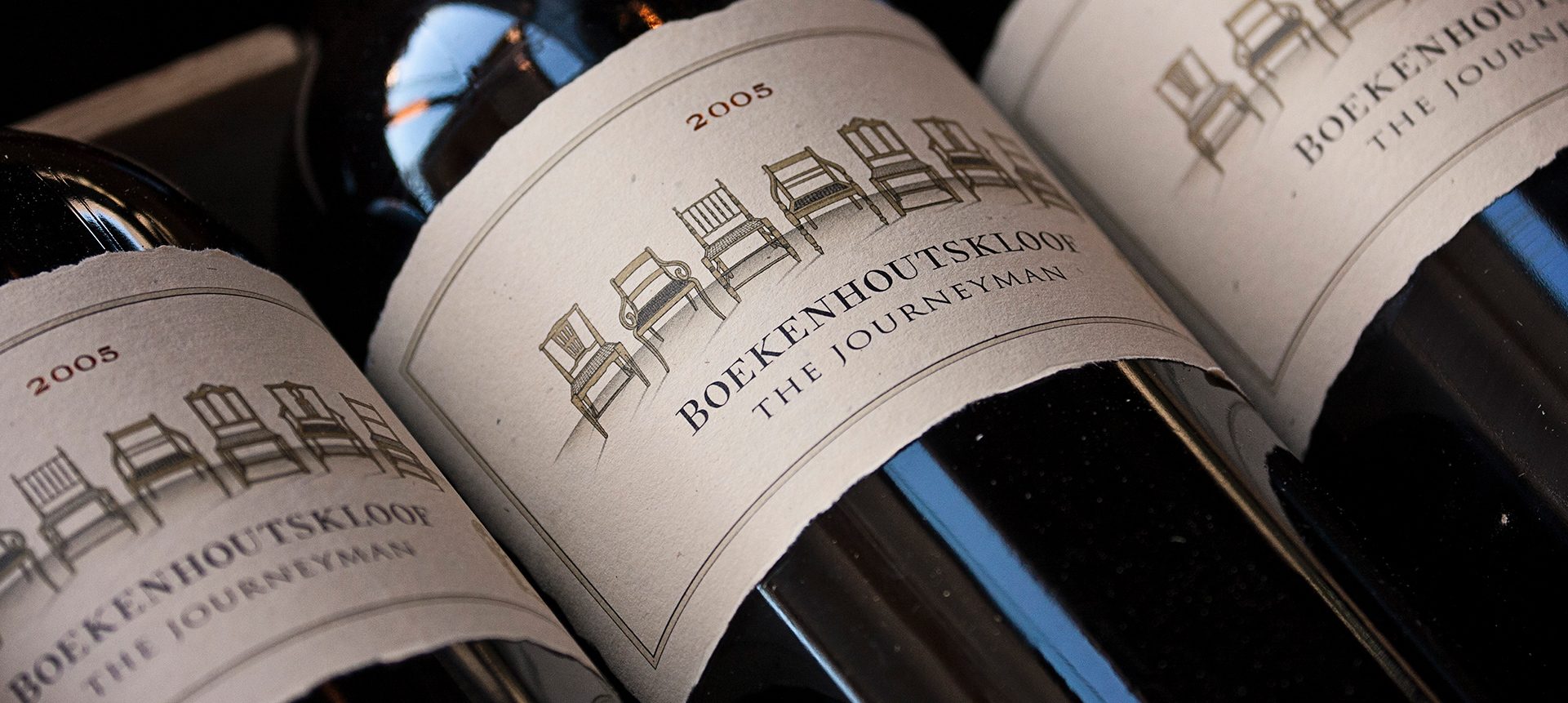
Outstanding Syrah from the upper slopes of Franschhoek, alongside the iconic Chocolate Block in which Swartland Syrah is the dominant component.
Minimalist Wines
Cool-climate Syrah from Elim, expressing the variety's most aromatic and mineral face in growing conditions that are genuinely distinct from the Swartland's old vine power.
Ageing South African Syrah
The finest South African Syrahs are built for the long term. Porseleinberg and Mullineux's single-terroir wines develop impressively over ten to twenty years, the tannins integrating gradually as the mineral complexity and aromatic depth increase. The 100-point vintages reward patience most fully at fifteen or more years. Keermont Topside develops best over eight to fifteen years. Damascene's Syrahs across all appellations reward eight to twelve years.