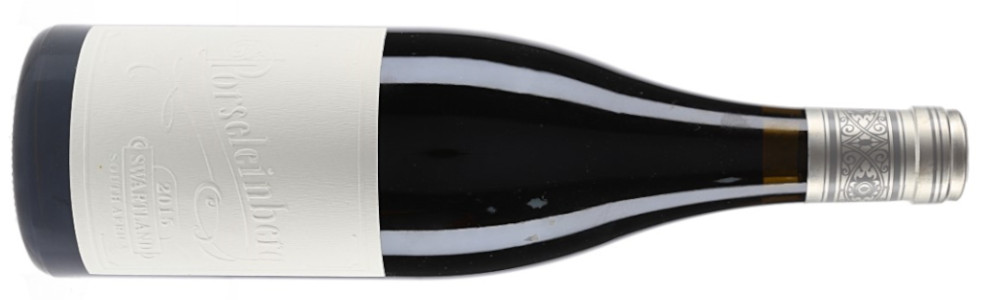
Porseleinberg 2016
Swartland, Coastal Region, South Africa
€662 In Bond VN 94
Case of 12 •€55.17 / btl Due In

You have no items in your shopping cart.
Swartland, Coastal Region, South Africa
Swartland, Coastal Region, South Africa
Swartland, Coastal Region, South Africa
Swartland, Coastal Region, South Africa
Swartland, Coastal Region, South Africa
Rated as a South African First Growth by leading wine critic Tim Atkin MW
Porseleinberg produces one wine. It is Syrah, from a single mountain in the Swartland, farmed by one man who lives among his vines and has devoted his working life to understanding what this specific terroir can produce. It has received multiple Tim Atkin 100-point scores. It is regularly compared in blind tastings to Jamet's Cote-Rotie. It is one of a very small number of wines produced in the southern hemisphere that belong, without qualification, in the highest tier of the international fine wine conversation.
The case for Porseleinberg does not require elaborate argument. The wines make it themselves.
Tim Atkin placed Porseleinberg as a First Growth in his 2025 Cape Classification, recognition that confirms what the scores have demonstrated across successive vintages: this is South African Syrah at its highest level, from a terroir of genuine geological individuality, produced with a philosophical rigour that is rare in any wine-producing country.
Porseleinberg is based on the Porseleinberg mountain in the Swartland, South Africa. The estate was established by Marc Kent of Boekenhoutskloof when he identified the exceptional viticultural potential of the mountain's ancient schist and granite soils. Winemaker and viticulturalist Callie Louw lives on the estate and manages every aspect of the vineyards and cellar. One wine is produced: Porseleinberg Syrah. Production is tiny. Tim Atkin First Growth. Multiple 100-point scores.
The Porseleinberg mountain takes its name from the pale, almost porcelain-like appearance of the rock outcrops that punctuate its slopes, a mixture of ancient Malmsbury schist and granite that has been exposed to the elements for hundreds of millions of years. The mountain rises from the surrounding Swartland plains and provides elevation, aspect and a specific combination of geological character that is the direct and immediate cause of Porseleinberg's exceptional wine quality.
Marc Kent of Boekenhoutskloof came across the mountain while sourcing fruit for his other winemaking ventures and recognised immediately what its soils and its old vine Syrah plantings were capable of. He established the estate in the mid-2000s, appointed Callie Louw to farm and make the wine, and provided the resources and the philosophical latitude that allowed Louw to pursue quality without compromise.
Callie Louw is one of the most genuinely committed vignerons in South Africa, a winemaker in the European tradition of the vigneron whose life and whose identity are inseparable from the land and vines they tend. He lives on the Porseleinberg estate, manages every vine personally, and brings a philosophical conviction to both farming and winemaking that is directly responsible for the quality and consistency of the wine.
His approach is informed by a deep engagement with the Northern Rhone's approach to Syrah, and particularly with the Cote-Rotie model of whole-cluster fermentation, dry-land viticulture and minimal intervention that produces Syrah of aromatic precision and mineral depth rather than concentrated, extracted power. The comparisons between Porseleinberg and Jamet's Cote-Rotie are not random: they reflect the genuine philosophical alignment between what Louw is doing in the Swartland and what the greatest Rhone producers do in their own entirely different terroir.
The Porseleinberg mountain's soils are a combination of Malmsbury schist and granite, two geological types that produce meaningfully different wine characters and that together account for the complexity and dimensionality of Porseleinberg Syrah.
The schist contributes the wine's aromatic precision and linear mineral character: the violet and white pepper top notes, the fresh acidity, the saline mineral finish that recalls the ancient ocean-floor origins of the rock. The granite contributes structural power, tannic density and a broader, weightier mineral depth that gives the wine its impressive cellar potential and its ability to develop over fifteen or more years without losing the freshness and aromatic definition that make it compelling in any period of its development.
The mountain's elevation above the surrounding plains creates growing conditions that are cooler than the valley floors, with stronger afternoon breezes that moderate temperature and preserve natural acidity. The exposure of the rock outcrops across the slopes means the vine roots engage directly with the geological substrate rather than with deep topsoil, producing fruit of exceptional concentration and mineral character that reflects the specific combination of schist and granite with unusual directness.
One wine. One variety. One mountain. The cellar approach that Callie Louw applies to this singular focus is correspondingly precise and uncluttered.
Whole-cluster fermentation for a significant portion of the wine, contributing the aromatic lift, silky texture and fresh stemmy complexity that are the hallmarks of great Rhone Syrah. Ageing in old neutral barrels and foudres, avoiding any contribution from new oak that might distort the direct expression of the mountain's terroir. Native yeast fermentation. No fining, no filtration. Extended ageing to allow the wine to find its natural equilibrium before bottling.
The result is a wine of exceptional aromatic precision, mineral depth and structural integrity that in youth can appear austere and demanding. With ten or more years of careful cellaring it reveals a complexity and aromatic richness that places it, without apology, in the highest company in the world of Syrah.
Tim Atkin has awarded Porseleinberg 100 points across multiple vintages, the highest recognition available from the most authoritative critic of South African wine. These are not regional awards or comparative scores: they represent the critic's judgement that the wine belongs among the finest produced anywhere in the world in that vintage. The consistency of recognition across successive vintages confirms that the quality is not accidental but is the reproducible result of exceptional terroir farmed with exceptional commitment.
Porseleinberg is the most straightforwardly compelling case for collecting South African Syrah. One wine, one mountain, one winemaker of absolute commitment, multiple 100-point scores, tiny production. The wine develops profoundly over fifteen to twenty-five years and its pricing, relative to wines of comparable critical recognition from the Northern Rhone, represents one of the clearest cases of quality-to-price misalignment currently available in fine wine.
All Porseleinberg wines purchased through Fine Wine Library are held In Bond, excise duty free, with guaranteed provenance.
Porseleinberg was established by Marc Kent of Boekenhoutskloof. The winemaker and viticulturalist is Callie Louw, who lives on the estate and manages every aspect of viticulture and winemaking.
The comparison reflects genuine stylistic alignment. Callie Louw's use of whole-cluster fermentation, dry-land old vine viticulture and minimal intervention produces a Syrah of aromatic precision and mineral character that is philosophically and stylistically closer to the finest Cote-Rotie than to any other Syrah-producing region. The comparison has been made by independent tasters in blind conditions, not as marketing.
Porseleinberg has received 100 points from Tim Atkin across multiple vintages, the highest score available. It is placed as a First Growth in Tim Atkin's 2025 Cape Classification.
Porseleinberg develops best over fifteen to twenty-five years, the tannins integrating gradually as the mineral complexity and aromatic depth increase. The 100-point vintages reward patience most fully at fifteen or more years.