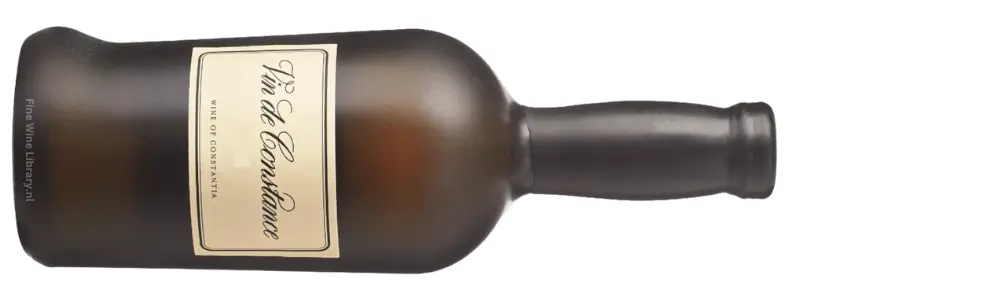
Klein Constantia Vin De Constance 2019 (50cl)
Constantia, Coastal Region, South Africa
€56.50 In Bond DC 98
Single Bottle In Stock

You have no items in your shopping cart.

Constantia is the oldest wine-producing area in South Africa, the place where Cape viticulture began in 1685 and the home of one of the most historically resonant wines produced anywhere in the southern hemisphere. The ward occupies the cool, south-facing slopes of the Constantiaberg mountain on the Cape Peninsula, south of Cape Town, in a setting of extraordinary natural beauty whose combination of altitude, aspect and proximity to both the Atlantic Ocean and False Bay creates growing conditions of remarkable natural balance.
Constantia, Coastal Region, South Africa
Constantia, Coastal Region, South Africa
Constantia, Coastal Region, South Africa
+ Other formats available
The wine that made Constantia famous is Vin de Constance, the legendary sweet Muscat produced by Klein Constantia. This wine was at the height of its European celebrity in the late eighteenth and early nineteenth centuries, when it was served at the courts of Frederick the Great and Louis XVI, beloved by Napoleon Bonaparte during his exile on Saint Helena and immortalised in the fiction of Jane Austen and Charles Dickens. Its revival in 1986 by Klein Constantia after more than a century of absence is one of the most remarkable stories in South African wine history.
Constantia is a ward within the Coastal Region of the Western Cape, South Africa. The ward is situated on the south-facing slopes of the Constantiaberg mountain on the Cape Peninsula, approximately 20 kilometres south of Cape Town. Elevations range from 100 to 500 metres above sea level. The soils are predominantly deep, weathered granite of exceptional drainage and mineral complexity. The climate is genuinely cool, with consistent southerly winds from False Bay and maritime influence from the Atlantic, producing one of the coolest growing environments in South Africa. The principal varieties are Muscat de Frontignan (for Vin de Constance), Sauvignon Blanc, Semillon, Chardonnay and red Bordeaux varieties. The essential producer with a Fine Wine Library page is Klein Constantia.
The history of Constantia begins in 1685, when Simon van der Stel, Governor of the Cape Colony, received a grant of 750 hectares of land on the Constantiaberg mountain and named it Groot Constantia. Van der Stel recognised immediately the exceptional viticultural potential of the site: the cool southerly aspect, the deep granite soils and the moderating influence of the surrounding ocean created conditions that could produce wines of a quality he had not previously encountered in the Cape.
By the mid-eighteenth century, the wine produced from the Constantia estate was being exported to Europe in quantities that made it one of the most celebrated and sought-after wines of the era. The sweet Muscadel produced from sun-dried Muscat de Frontignan grapes developed a particular following among the aristocracy and literati of Europe. Napoleon, confined to Saint Helena after Waterloo, had thirty cases of Constantia delivered to the island each year. Charles Dickens included it by name in Edwin Drood and The Mystery of Edwin Drood. Jane Austen's characters reach for it in moments of distress. It was, by any measure, the most famous wine produced in the southern hemisphere.
The early nineteenth century brought a series of setbacks: the phylloxera epidemic, shifting European tastes, economic pressure on the Cape wine industry and changes in ownership that saw the quality and reputation of Constantia wine decline steadily over the course of a century. By the mid-twentieth century, the wine that had once commanded the highest prices in Europe was largely forgotten.
The revival began in 1980 when a new ownership group at Klein Constantia committed to restoring Vin de Constance to its historic standard. The first new vintage was released in 1986, and the wine has continued to develop in quality and critical recognition in the decades since, with Tim Atkin awarding it 98 points across multiple recent vintages.
Constantia's deep, weathered granite soils are among the most distinctive in South African viticulture. Formed from the Precambrian Cape Granite that underlies the entire Cape Peninsula, these soils are well-drained, nutrient-poor and of exceptional depth, encouraging the vine roots to extend deeply in search of water and mineral nutrients. The combination of granite's natural drainage and the Constantiaberg's considerable elevation produces conditions of vine stress that concentrates fruit character without extracting the fresh acidity and aromatic definition that the cool climate preserves.
The climate is fundamentally shaped by geography. The Constantiaberg sits at the tip of the Cape Peninsula, exposed to cooling winds from both the Atlantic Ocean to the west and False Bay to the east. This dual maritime influence produces one of the coolest and most consistent growing environments in the Western Cape, with natural temperature moderation throughout the growing season that preserves the acidity and aromatic precision that define the finest Constantia wines.
Vin de Constance is the wine that defines Constantia and one of the most historically significant wines produced anywhere in the southern hemisphere. It is made from Muscat de Frontignan grapes harvested at full natural botrytis, producing a wine of extraordinary aromatic complexity, natural sweetness and remarkable longevity without the addition of any spirit or fortification.
The style is unlike any other sweet wine. Where Sauternes achieves its sweetness through botrytis concentration in a damp river valley climate, and Port through fortification, Vin de Constance is the natural product of Muscat grapes reaching extreme ripeness on a cool granite hillside, dried and concentrated on the vine by the warm northerly winds that periodically sweep the Cape Peninsula during the final weeks before harvest.
The current expression of Vin de Constance from Klein Constantia, produced in 50-centilitre bottles as was the original historic format, is one of the most individually compelling and historically resonant sweet wines produced anywhere in the world. Recent vintages have attracted scores of 98 points from Tim Atkin and comparable recognition from other leading critics.
The most important estate in Constantia and the producer of Vin de Constance, the revival of which in 1986 is one of the most significant moments in modern South African wine history. Under the ownership of the Jooste and latterly the Rawbone-Venter families, Klein Constantia has developed Vin de Constance into a wine of genuine world-class quality and historical resonance, consistently attracting scores of 97 and 98 points from Tim Atkin. The estate also produces an excellent range of dry wines from Sauvignon Blanc, Riesling and Cabernet Sauvignon.
Constantia offers collectors access to one of the world's most historically resonant wine regions and a sweet wine of genuine uniqueness in Vin de Constance. No other wine in South Africa carries the same depth of historical association with the courts and literary culture of Europe, and the quality of the current expression from Klein Constantia fully justifies the reputation the wine earned in the eighteenth century.
For collectors who want to build a South African cellar that spans the full range of the Cape's quality and historical significance, Constantia and Vin de Constance are essential components. The wine develops beautifully over ten or more years, revealing increasing aromatic complexity and a depth of character that reflects both the exceptional terroir and the extraordinary historical tradition it embodies.
All Constantia wines purchased through Fine Wine Library are held In Bond, excise duty free, with guaranteed provenance.
Vin de Constance is a naturally sweet Muscat wine produced by Klein Constantia from Muscat de Frontignan grapes on the slopes of the Constantiaberg mountain. It is the revival of a wine that was one of the most celebrated and expensive wines in Europe in the late eighteenth and early nineteenth centuries, beloved by Napoleon, Charles Dickens, Jane Austen and the courts of Frederick the Great and Louis XVI.
Governor Simon van der Stel established the first vineyards on the Constantiaberg in 1685, making Constantia the site of the earliest serious viticulture in South Africa. The estate he founded, Groot Constantia, still exists and operates today.
Vin de Constance is produced from Muscat de Frontignan grapes that reach natural botrytis concentration on the vine, producing extraordinary sweetness without the addition of any spirit or fortification. It is bottled in 50-centilitre formats that replicate the historic presentation of the original eighteenth-century wine.
Constantia is the coolest and most historically rooted of the major South African wine wards, distinguished by its granite soils, dual maritime influence and the unique historical significance of Vin de Constance. Where Stellenbosch is defined by red wines and Swartland by old vine Chenin Blanc and Syrah, Constantia's identity is anchored in Vin de Constance and the exceptional cool-climate dry wines that share the ward's granite hillsides.