
July 19, 2026
Why South Africa is the Most Exciting Wine Region
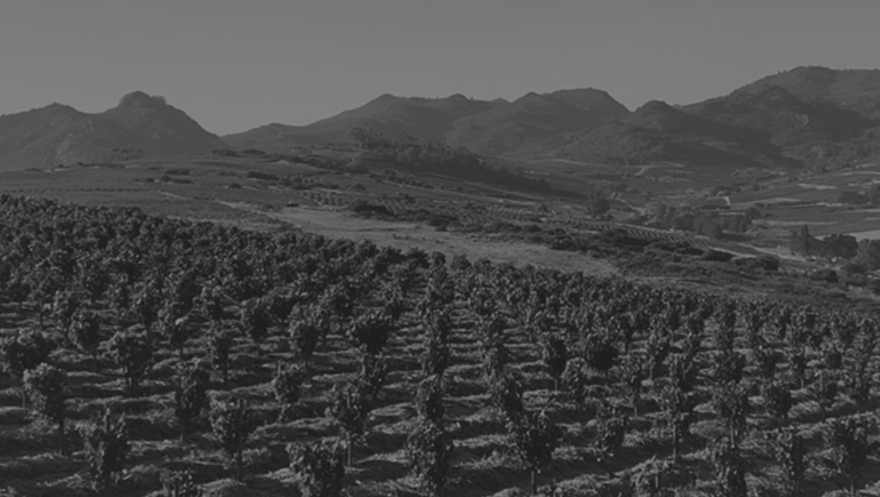
There is a moment in the life of every serious wine region when the quality of the wines, the ambition of the producers and the weight of critical recognition converge into something that collectors who understand these things recognise as an opportunity. Burgundy had its moment in the 1980s. Barolo had it in the 1990s. The question worth asking now, with as much analytical rigour as the question deserves, is whether South Africa is having its moment in the 2020s.
The evidence suggests it is. Not because of a single dramatic development or a single critical score, but because of the cumulative effect of two decades of increasingly serious winemaking, an accelerating body of critical recognition at the very highest level, and a pricing structure that has not yet adjusted to reflect the quality that the most informed observers of the region now take for granted. This is an article about that opportunity and about the specific, verifiable reasons why South Africa deserves its place in the most serious fine wine collections being built anywhere in the world right now.
The Quality Is Genuinely World-Class
The first and most important point is also the simplest: the finest South African wines are not impressive for South African wines. They are impressive by any standard, against any comparison, in any company.
Porseleinberg's Syrah has received multiple Tim Atkin 100-point scores. The Mullineux Straw Wine has received the same. Tim Atkin's 100 points are not awarded as regional consolation prizes. They represent the winemaker's considered judgement that a wine belongs among the finest produced anywhere in the world in that vintage. When those scores go to South African wines, they belong in the same sentence as Romanée-Conti, Rayas and the most celebrated wines of Burgundy and the Northern Rhone.
The Sadie Family's Columella and Palladius routinely score 98 and 99 points from Atkin and comparable recognition from Vinous and other leading critical voices. Hamilton Russell Vineyards has produced Pinot Noir and Chardonnay that hold their own in blind tastings against Burgundy's finest at a fraction of the price. Crystallum's Cuvée Cinema Chardonnay, Damascene's Stellenbosch Syrah and Keermont's Topside Syrah are all wines that in a different national context would be regarded as internationally significant addresses.
This is not a region producing ambitious wines that fall slightly short of the finest European equivalents. It is a region producing wines of equivalent quality in multiple styles, from multiple appellations, across a generation of producers who have been working at the highest level of ambition for long enough to have developed a body of evidence for their consistency.
The Terroir Is Irreplaceable
The second argument for South Africa is geological and viticultural, and it is the argument that carries the most weight for collectors with a long time horizon: the terroir cannot be created elsewhere and cannot be replicated.
The ancient Malmsbury shale and granite soils of the Swartland were formed hundreds of millions of years ago. The bush vine Chenin Blanc and Syrah growing on them without irrigation were planted in the 1950s, 1960s and 1970s. The combination of geological age and vine age produces a wine character of concentration, mineral depth and natural balance that younger vines in younger soils cannot replicate, regardless of the quality of the winemaking. You cannot plant your way to old vine Swartland terroir. It either exists or it does not, and the vineyards that carry the Old Vine Project's Certified Heritage Vineyard designation are assets that will become rarer and more valuable, not more common, as time passes.
The same principle applies in the Hemel-en-Aarde Valley, where Tim Hamilton Russell planted the first vines in 1975 on Bokkeveld shale soils that have now been farmed for fifty years under a consistent philosophy. The accumulated understanding of those specific soils, encoded in Hamilton Russell Vineyards' winemaking across five decades, cannot be manufactured or imported. It is a genuine, irreplaceable asset.
Constantia's Vin de Constance from Klein Constantia is historically unique: a sweet wine with a documented lineage to the courts of eighteenth-century Europe, produced from a specific variety on a specific hillside, with no equivalent anywhere else in the world. Franschhoek's old vine Semillon traces its lineage to French Huguenot settlers of 1688. These are not marketing narratives. They are historical facts that give the wines a provenance and a specificity that are genuinely impossible to replicate.
The Pricing Hasn't Caught Up
The third argument is the most commercially important for collectors making decisions now: the pricing of South African fine wine has not adjusted to reflect the quality that the critical establishment has recognised.
This is not a permanent condition. It is a transitional one, and it will not persist indefinitely. The collectors who built positions in Burgundy's emerging appellations before they became famous paid prices that are now unimaginable. The collectors who recognised the quality of Barolo's finest estates before the international market did likewise. The pattern is consistent: critical quality recognition precedes collector market recognition, and the window between the two is the moment of genuine opportunity.
South African fine wine is in that window now. A wine like Porseleinberg, which carries a 100-point score from the region's most authoritative critic, is available at a price that bears no relationship to what a comparably scored wine from Burgundy or the Northern Rhone would command. Mullineux's single-terroir Syrahs and old vine Chenin Blancs, Crystallum's Pinot Noirs and Chardonnays, The Sadie Family's old vine range: all are available at prices that reflect the current level of international collector demand rather than the absolute quality of the wines.
The fundamental dynamic of fine wine economics applies here as it has applied everywhere this situation has occurred: the wines that are recognised as world-class before the broader collector market arrives are the ones that deliver the most compelling returns when that market eventually catches up. The question is not whether South African fine wine's international profile will continue to develop. It will. The question is whether a collector builds a position before or after that development is reflected in prices.
The Producer Generation Is Exceptional
The fourth argument concerns the human capital behind the wines, because the quality of a wine region at any given moment is inseparable from the quality of the producers working in it.
The generation of South African winemakers currently at the height of their powers is genuinely exceptional. Eben Sadie of The Sadie Family is regarded by many of the most serious wine critics in the world as one of the most important living winemakers, in any country. Andrea Mullineux of Mullineux has received Winemaker of the Year recognition from multiple publications and produces wines of a philosophical clarity and technical precision that belong in the highest tier of global winemaking.
Peter-Allan Finlayson of Crystallum, Bruwer Raats of Raats Family, Lukas van Loggerenberg of Van Loggerenberg, Matthew van Heerden of Damascene, Samantha O'Keefe of Lismore: these are winemakers of genuine international calibre whose careers are at their peak, whose vineyards are maturing, and whose philosophical convictions have been tested and refined across multiple decades of serious production.
This is not a region waiting for its best producers to arrive. They are already here, already producing at the highest level, already building the body of work that will define South African fine wine for the next generation.
The Critical Consensus Is Established
The fifth argument concerns the critical infrastructure that serious collectors rely on to navigate a wine region they are learning, and here too the case for South Africa is compelling.
Tim Atkin's annual South Africa report is the most comprehensive and authoritative critical assessment of any single wine country's production published anywhere in the world. His 2025 Cape Classification provides a structured ranking of producers from First Growth to Cru Bourgeois, updated annually to reflect changes in quality, that gives collectors a reliable framework for navigating the region with confidence.
The critical consensus his work has established, confirmed by Vinous, Wine Advocate and other leading voices, is that South Africa's First Growths are wines of genuinely world-class quality and that the Second and Third Growths offer compelling quality at prices that more established wine regions cannot match. For a collector building a South African cellar from scratch, this critical framework is an unusually reliable guide to where the genuinely serious wine is produced.
The Moment Is Now
The combination of these five factors (world-class quality, irreplaceable terroir, compelling pricing, an exceptional producer generation and an established critical framework) describes a wine region at precisely the moment when serious collector engagement delivers the most reward.
The Swartland has demonstrated what old vine dry-land viticulture can achieve on ancient South African soils. The Hemel-en-Aarde Valley has demonstrated that cool-climate Pinot Noir and Chardonnay at the world-class level are not the exclusive province of Burgundy. Stellenbosch has shown that Cabernet Sauvignon, Syrah and Chenin Blanc from three centuries of accumulated viticultural knowledge produce wines of genuine depth and longevity. Constantia has revived one of the most historically resonant wines in the world.
None of this is new information for the producers who have been building it over the past two decades. It is increasingly not new information for the most informed segment of the international collector market. The question for collectors who have not yet engaged seriously with South African fine wine is not whether the region deserves attention. It is whether to act on that attention now, while the pricing window remains open, or later, when it has closed.
Explore South Africa
Buy Hemel-en-Aarde Valley Wine