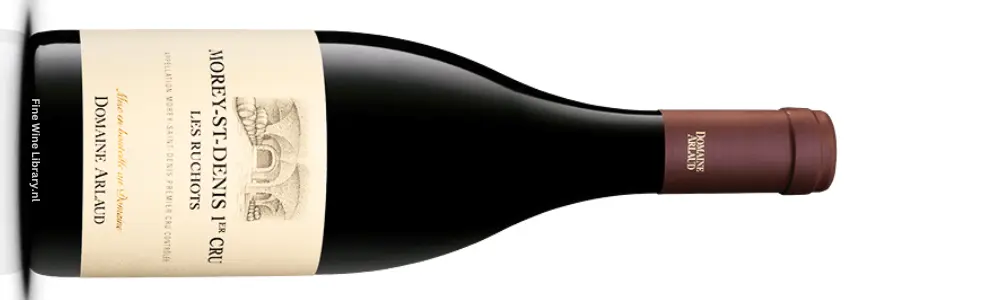
Domaine Arlaud Morey-Saint-Denis Premier Cru Les Ruchots 2016
Morey-Saint-Denis, Burgundy, France
€753 In Bond VN 91-93
Case of 6 •€125.50 / btl Due In

You have no items in your shopping cart.
Morey-Saint-Denis sits at the heart of the Cote de Nuits, sandwiched between Gevrey-Chambertin to the north and Chambolle-Musigny to the south, and for generations it has been Burgundy's most underrated Grand Cru village. Despite housing four entirely enclosed Grand Cru vineyards within its boundaries (a distinction matched only by Gevrey-Chambertin among all the villages of the Cote d'Or), Morey-Saint-Denis has consistently attracted less attention and commanded lower prices than its celebrated neighbours.
Morey-Saint-Denis, Burgundy, France
Morey-Saint-Denis, Burgundy, France
Morey-Saint-Denis, Burgundy, France
Morey-Saint-Denis, Burgundy, France
For serious collectors, that underappreciation is the most compelling argument for engaging with the village. The terroir is genuinely exceptional. The producer roster includes Domaine Ponsot, Domaine Dujac, Clos de Tart and Domaine des Lambrays, each with a distinct philosophy and a compelling body of work behind them. And the wines, in the finest vintages and from the finest producers, develop a depth and complexity that belongs in any serious conversation about the Cote de Nuits.
Morey-Saint-Denis combines elements of both its neighbours: the structural power and mineral depth of Gevrey-Chambertin alongside the aromatic finesse and textural elegance of Chambolle-Musigny. This synthesis is not a compromise but a genuine and individual expression, producing Pinot Noir that has its own character, its own rhythm of development and its own particular pleasures for those who take the time to understand it.
Morey-Saint-Denis is situated between Gevrey-Chambertin and Chambolle-Musigny in the Cote de Nuits, Burgundy. The village produces almost exclusively Pinot Noir alongside a small and historically unusual production of white wine from the Les Monts Luisants Premier Cru. It is home to four Grand Cru vineyards: Clos de la Roche, Clos Saint-Denis, Clos des Lambrays and Clos de Tart, plus a small portion of Bonnes Mares. The style sits between Gevrey-Chambertin and Chambolle-Musigny, combining structural power and mineral depth with aromatic finesse and textural refinement. Leading producers include Domaine Ponsot, Domaine Dujac, Clos de Tart and Hubert Lignier.
The case for Morey-Saint-Denis as the most compelling value proposition in the Cote de Nuits rests on a simple and durable truth: four Grand Cru vineyards whose terroir quality is recognised by everyone who studies the village seriously, priced at a consistent discount to the Grand Crus of Gevrey-Chambertin and Vosne-Romanee despite producing wines of directly comparable quality and longevity from the finest producers.
The village also benefits from one of the most intellectually diverse producer landscapes in Burgundy. No two estates in Morey-Saint-Denis approach the same terroir in quite the same way: Domaine Ponsot's radical no-new-oak, very-old-vines philosophy, Domaine Dujac's pioneering whole-cluster approach, Hubert Lignier's elegant and mineral precision and Domaine Arlaud's improving biodynamic focus provide collectors with a genuine comparative survey of how philosophy and terroir interact across the same village. This diversity of approach is, in itself, part of what makes Morey-Saint-Denis so interesting and rewarding to collect seriously.
The vineyards of Morey-Saint-Denis occupy east and south-east facing slopes on limestone and marl soils with varying clay content across the appellation's different sites. The geological character sits between the predominantly limestone soils of Chambolle-Musigny to the south, which contribute to that village's characteristic aromatic lift and textural elegance, and the deeper, more clay-rich limestone of parts of Gevrey-Chambertin to the north, which produce that village's power and structural density.
The four Grand Cru vineyards are all enclosed within walls, clos, which historically distinguished them as separately managed and vinified parcels. This walled enclosure tradition reflects both the historical recognition of each site's exceptional quality and the practical management of distinct terroirs within a relatively compact hillside.
The finest sites occupy the middle slope, where drainage is excellent and the combination of limestone, marl and well-draining soils produces wines of both concentration and freshness. The Clos de la Roche, at the northern end of the Grand Cru band, benefits from deeper soils and a slightly warmer aspect that contribute to its greater power and structural density. The Clos Saint-Denis, at the southern end, has thinner, more limestone-dominant soils that produce wines of greater aromatic finesse and mineral precision.
Morey-Saint-Denis's Premier Crus span a range of styles and aspects across the village, providing excellent quality and genuine ageing potential at prices below the Grand Crus.
One of the most consistently excellent Premier Crus in the village, producing wines of good structure, dark fruit character and genuine ageing potential from a well-sited parcel.
A Premier Cru of notable quality on the mid-slope, producing wines of mineral precision and good depth that develop well over ten to fifteen years.
From the southern part of the appellation, bordering Chambolle-Musigny, Les Ruchots produces wines with more aromatic lift and textural elegance than the more powerful northern Premier Crus, reflecting the gradual transition in terroir character toward the neighbouring village.
One of the most unusual Premier Crus in the Cote de Nuits, Les Monts Luisants is notable for producing both red and white wine. Domaine Ponsot produces a white wine from old Aligoté and Chardonnay vines within this Premier Cru that is one of the most unusual and collectible white wines produced anywhere in the Cote de Nuits, with a mineral precision and longevity that challenges the conventional assumption that the Cote de Nuits is exclusively red wine territory.
At the northern edge of the appellation, bordering Gevrey-Chambertin, Aux Combottes produces wines of greater power and structure that reflect the Gevrey-Chambertin character of the neighbouring village. Outstanding expressions from Domaine Dujac and Domaine Arlaud.
The largest and most powerful of the four Grand Crus entirely within Morey-Saint-Denis, Clos de la Roche is approximately 16.9 hectares and produces wines of impressive structural depth, dark fruit concentration and genuine mineral complexity. It is the Grand Cru most commonly associated with the power and earthiness of Gevrey-Chambertin, yet with an aromatic refinement and textural precision that reflects the Morey-Saint-Denis character at its finest. The finest examples require fifteen or more years to show their best and can develop for thirty years in the finest vintages. Outstanding expressions from Domaine Ponsot, Domaine Dujac, Hubert Lignier and Domaine Arlaud.
The Grand Cru after which the village was named, Clos Saint-Denis is approximately 6.6 hectares and produces wines of greater aromatic refinement and mineral elegance than the more powerful Clos de la Roche. Thinner, more limestone-dominant soils on the southern portion of the Grand Cru band contribute to a style that combines genuine Grand Cru depth with a textural precision and aromatic delicacy more reminiscent of Chambolle-Musigny than Gevrey-Chambertin. Outstanding expressions from Domaine Ponsot and Domaine Dujac, the latter producing what many collectors regard as the most aromatically complex and expressive interpretation of this site.
Approximately 8.66 hectares and farmed almost entirely by Domaine des Lambrays, the Clos des Lambrays holds one of the most distinctive positions in Burgundy's Grand Cru hierarchy: a vineyard elevated from Premier Cru to Grand Cru only in 1981, whose terroir quality was recognised long before the formal classification caught up with the evidence. Under LVMH ownership since 2014, the estate is producing wines of increasing precision and quality that are beginning to assert the full potential of this exceptional site.
A total monopole of 7.53 hectares owned in its entirety by Clos de Tart and one of the most historically significant vineyards in Burgundy, with Cistercian origins dating to 1141. Under Artemis Domaines ownership since 2017, the estate is producing wines of exceptional quality that honour both the historic pedigree of the site and the ambitions of an owner who has brought comparable commitment to Château Latour. The wines combine power and structural depth with an aromatic complexity and mineral precision that is developing increasingly clearly with successive vintages.
A small portion of the Bonnes Mares Grand Cru, approximately 1.5 hectares, falls within Morey-Saint-Denis at the southern boundary of the village. The majority of Bonnes Mares lies within Chambolle-Musigny, and this Morey-Saint-Denis portion typically expresses a somewhat more powerful and earthy character than the Chambolle-Musigny section. Several producers hold parcels in this small but prestigious section.
Morey-Saint-Denis occupies a genuinely distinctive position in the Cote de Nuits landscape, combining the structural power and mineral depth that characterise Gevrey-Chambertin with the aromatic finesse and textural elegance more commonly associated with Chambolle-Musigny. The result is a style that is entirely its own: darker and more structured than Chambolle-Musigny, more aromatically precise and texturally refined than the most powerful Gevrey-Chambertin, with a particular mineral quality derived from the village's distinctive limestone and marl soils.
Young Morey-Saint-Denis from the finest producers and sites can appear closed and demanding, with dark fruit, mineral earth and a firm tannic structure that seems to resist the taster. With patience, these same wines open to reveal extraordinary aromatic complexity: black cherry, blackberry, violets, forest floor, dried herbs, truffle and a mineral precision that develops progressively over fifteen to twenty-five years. The wines of Domaine Ponsot and Clos de Tart in particular have demonstrated across many decades that the village's finest sites are capable of producing Pinot Noir of a longevity that challenges comparison with anything produced in the Cote de Nuits.
The influence of Domaine Dujac's whole-cluster philosophy on the village's winemaking culture is also worth acknowledging: several of the younger generation of Morey-Saint-Denis producers have adopted or adapted elements of the Dujac approach, contributing to a broader move toward greater aromatic complexity and textural refinement across the village's winemaking landscape.
The most radical and philosophically distinctive estate in Morey-Saint-Denis, producing Pinot Noir of extraordinary intensity and longevity from very old vines with no new oak and minimal intervention. The Clos de la Roche Vieilles Vignes is one of the most celebrated and genuinely irreplaceable wines produced in the Cote de Nuits, developing extraordinary complexity over twenty-five or thirty years.
One of the most philosophically influential estates in modern Burgundy, pioneering the systematic use of whole-cluster fermentation and producing wines of extraordinary aromatic complexity, textural elegance and longevity from Clos de la Roche, Clos Saint-Denis and an outstanding range of Premier Cru and Grand Cru holdings across the Cote de Nuits under Jeremy Seysses.
The sole monopole Grand Cru of Morey-Saint-Denis, with Cistercian origins dating to 1141, now under the ambitious and well-resourced stewardship of Artemis Domaines. The wines are producing with increasing precision and quality, honouring nearly nine centuries of continuous winemaking history from an exceptional single vineyard.
The near-monopole owner of Clos des Lambrays Grand Cru, Burgundy's most recently elevated Grand Cru, now under LVMH ownership and producing wines of clearly improving quality that are beginning to assert the full potential of a vineyard whose terroir quality has always exceeded its institutional recognition.
One of the most elegantly precise and consistently excellent family estates in Morey-Saint-Denis, producing Clos de la Roche Grand Cru of unusual aromatic definition and textural refinement alongside outstanding Premier Cru wines from across the Cote de Nuits. The most elegant expression of Clos de la Roche available from any producer in the village.
A compelling and rapidly improving estate under brothers Cyprien and Romain Arlaud, producing biodynamically farmed Grand Cru wines across Clos de la Roche, Charmes-Chambertin and Ruchottes-Chambertin with a precision and mineral focus that has attracted growing critical recognition. One of the most exciting quality improvement stories in contemporary Morey-Saint-Denis.
Village Morey-Saint-Denis provides an excellent introduction to the village's characteristic combination of structural power and aromatic precision, at a price that makes it one of the most accessible quality Pinot Noirs in the Cote de Nuits. Producers including Hubert Lignier and Domaine Dujac produce outstanding village wines that clearly express the village's individual character.
Premier Crus such as Clos des Ormes, Les Millandes and Aux Combottes from the leading producers deliver genuine complexity and longevity at prices that, whilst significant, represent compelling value relative to Grand Cru Morey-Saint-Denis and even more compelling value relative to comparable Grand Crus from Gevrey-Chambertin or Vosne-Romanee. The white Les Monts Luisants from Domaine Ponsot is the most unusual and collectible option at Premier Cru level.
For collectors seeking the finest Morey-Saint-Denis, Clos de la Roche from Domaine Ponsot Vieilles Vignes, Domaine Dujac and Hubert Lignier represent the essential references for this Grand Cru. The Clos de Tart monopole from Clos de Tart is one of the most historically significant and compelling Grand Cru purchases available in Burgundy. The Clos des Lambrays from Domaine des Lambrays represents the most interesting Grand Cru with an upward quality trajectory.
Morey-Saint-Georges represents the most consistently undervalued Grand Cru village in the Cote de Nuits and one of the most intellectually rewarding to collect. Four entirely enclosed Grand Cru vineyards, a producer landscape of extraordinary diversity and quality, and prices that reflect the village's lower profile rather than the genuine quality of its finest sites combine to make it one of the most compelling current opportunities in fine Burgundy.
At Fine Wine Library, we focus on producers who genuinely express the character and potential of Morey-Saint-Denis, from the radical philosophical conviction of Domaine Ponsot through the whole-cluster elegance of Domaine Dujac to the quietly excellent precision of Hubert Lignier. Every bottle is sourced with a focus on provenance, condition and long-term collector potential.
All Morey-Saint-Denis wines purchased through Fine Wine Library are held In Bond, excise duty free, with guaranteed provenance.
The village has historically been overshadowed by Gevrey-Chambertin to the north and Chambolle-Musigny to the south, two villages whose names are more immediately recognisable to the broader market. Morey-Saint-Denis has also been slower to develop an internationally celebrated producer roster of the same prominence, though this is changing as estates like Domaine Dujac, Domaine Ponsot, Clos de Tart and Domaine des Lambrays attract increasing attention.
The village has four Grand Cru vineyards entirely within its boundaries: Clos de la Roche, Clos Saint-Denis, Clos des Lambrays and Clos de Tart. A small portion of Bonnes Mares, which lies primarily within Chambolle-Musigny, also falls within Morey-Saint-Denis, giving the village a claim to five Grand Crus in total.
Morey-Saint-Denis combines the structural power and mineral depth of Gevrey-Chambertin with the aromatic finesse and textural elegance of Chambolle-Musigny, producing Pinot Noir of dark fruit, mineral earth, forest floor and dried herb character with a firm but refined tannic structure that develops over fifteen to twenty-five years into extraordinary complexity.
Clos de Tart is the only monopole Grand Cru in Morey-Saint-Denis, owned entirely by a single estate. Its Cistercian origins date to 1141, making it one of the longest continuously documented wine-producing sites in Burgundy. Under Artemis Domaines ownership since 2017, the wines are of increasing quality.
Domaine Ponsot produces its Clos de la Roche Grand Cru from some of the oldest Pinot Noir vines in Morey-Saint-Denis, with no new oak and minimal sulphur, a philosophy applied consistently for generations. The result is a wine of extraordinary concentration and longevity that is considered by its devoted following to be one of the most profound red wines in the Cote de Nuits.
Village wines from leading producers develop well over eight to twelve years. Premier Crus benefit from ten to fifteen years. The finest Grand Cru expressions, particularly Clos de la Roche from Domaine Ponsot and Clos de Tart, should not typically be opened within fifteen years and can continue developing for twenty-five or thirty years in the finest vintages.
The Four Grand Crus of Morey-Saint-Denis
Clos de Tart Explained
Domaine Ponsot and the Philosophy of Old Vines
Gevrey-Chambertin vs Morey-Saint-Denis