The foundations of Chablis lie in geology. The vineyards are planted on soils formed more than 150 million years ago, rich in limestone and fossilised marine organisms. This ancient seabed imparts a distinctive mineral profile that has become synonymous with the appellation and remains one of the defining characteristics of great Chablis.
Winemaking traditionally favours purity over influence. Many producers employ stainless steel or older oak vessels, allowing the terroir to remain at the forefront. The objective is simple: to preserve freshness, tension and the transparent expression of each vineyard site.
Chablis at a Glance
Chablis is situated approximately 180 kilometres north-west of Dijon, making it the most northerly wine district of Burgundy and one of the most northerly major Chardonnay appellations in the world. The appellation produces exclusively white wine from Chardonnay and is divided into four quality tiers: Petit Chablis, Chablis village, Premier Cru and Grand Cru. The seven Grand Crus sit on a single south-west facing hillside overlooking the town of Chablis and represent the pinnacle of the appellation. The style is mineral, precise and exceptionally age-worthy, defined above all by the Kimmeridgian limestone soils that give Chablis its distinctive character. Leading producers include Domaine François Raveneau, Vincent Dauvissat and Domaine William Fevre.
Why Buy Chablis?
Chablis offers extraordinary diversity and, across its finest producers and sites, a quality of mineral Chardonnay that is found nowhere else in the world. The combination of Kimmeridgian limestone soils, a cool continental climate and a long tradition of minimal-intervention winemaking produces white wines of a precision, freshness and longevity that have made the appellation one of the essential destinations for collectors of serious white Burgundy.
The four-tier classification system, from Petit Chablis through to the seven Grand Crus, provides collectors with a clear quality hierarchy and a range of entry points that suits every budget. At village and Premier Cru level the wines offer outstanding value, combining genuine mineral complexity with the kind of food-friendly freshness that makes them highly versatile at the dinner table. At Grand Cru level, the finest bottles from Domaine François Raveneau and Vincent Dauvissat represent some of the most extraordinary and age-worthy white wines produced anywhere in the world.
Terroir and Climate
Kimmeridgian limestone forms the backbone of Chablis. Rich in fossilised oyster shells and marine sediments deposited more than 150 million years ago when the region lay beneath a shallow tropical sea, these soils contribute the freshness and distinctive mineral character that set Chablis apart from every other expression of Chardonnay. The Portlandian limestone found in lower-lying areas, used for Petit Chablis, is younger and provides wines of a lighter, more immediately approachable style.
The region's cool continental climate brings both opportunity and challenge. Spring frosts remain a constant threat, regularly reducing yields across the appellation and contributing to the relative scarcity of the finest wines. However, the cooler temperatures also preserve the natural acidity and aromatic purity that allow Chablis to age with remarkable grace.
The finest vineyards benefit from south and south-west facing exposures, encouraging optimal ripening on the Kimmeridgian hillsides whilst retaining the freshness and tension that define the Grand Cru and Premier Cru tier. These geological nuances explain why the single south-west facing Grand Cru hillside produces wine of such concentration and longevity, whilst the limestone soils more broadly ensure that the mineral character of the appellation runs through every level of the quality pyramid.
The Four Levels of Chablis
Petit Chablis
The gateway to Chablis.
Produced on younger Portlandian limestone soils on the plateau above the appellation, Petit Chablis offers bright citrus fruit, crisp acidity and immediate drinkability. The wines provide an accessible introduction to the region's distinctive style and are typically at their best within three to five years of the vintage.
Chablis Village
The classic expression of the appellation.
Village Chablis is grown across the broader appellation on Kimmeridgian and Portlandian soils, combining freshness, minerality and remarkable versatility. The best examples from leading producers deliver impressive complexity and ageing potential whilst retaining their trademark purity, and consistently outperform their classification in the hands of estates such as Domaine François Raveneau and Vincent Dauvissat.
Chablis Premier Cru
A step towards greatness.
Forty recognised Premier Cru climats occupy some of the region's finest slopes on both banks of the Serein river, producing wines of real depth, structure and longevity. Sites such as Montée de Tonnerre, Fourchaume and Vaillons consistently produce wines that approach Grand Cru quality in the hands of the finest producers and reward eight to twenty years of careful cellaring.
Chablis Grand Cru
The pinnacle of mineral Chardonnay.
The seven Grand Crus sit on a single south-west facing hillside overlooking the town of Chablis, representing the most concentrated and age-worthy expressions of Kimmeridgian limestone Chardonnay produced anywhere in the world. In the hands of the finest producers, the Grand Crus develop extraordinary complexity over twenty or more years whilst retaining the freshness and mineral tension that are the hallmarks of the appellation.
The Great Premier Crus
Chablis' forty Premier Cru climats produce wines of impressive diversity and genuine quality, offering collectors some of the finest value in white Burgundy relative to the Grand Crus.
Montée de Tonnerre
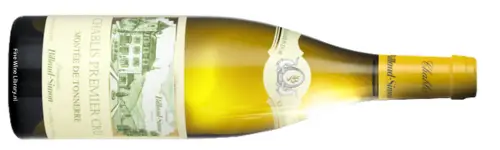
The most celebrated Premier Cru in Chablis and widely regarded as the finest site below Grand Cru level. Montée de Tonnerre produces wines of extraordinary mineral precision, aromatic complexity and ageing potential that are frequently spoken of as Grand Cru quality. Outstanding expressions come from Domaine François Raveneau, Vincent Dauvissat, Domaine Samuel Billaud and Jean-Paul & Benoît Droin, with Domaine Billaud-Simon's Tête d'Or selection from within the vineyard among the most celebrated single-parcel expressions.
Fourchaume
One of the most consistently excellent Premier Crus in Chablis, Fourchaume occupies a south-west facing slope on the right bank of the Serein and produces wines of real richness and texture alongside the mineral freshness that defines the appellation. It is often the most immediately approachable of the leading Premier Crus in its youth.
Vaillons
A large and well-regarded Premier Cru on the left bank of the Serein, Vaillons produces wines of generous fruit and mineral character that offer excellent value at the Premier Cru level. Leading expressions come from Vincent Dauvissat, Domaine Billaud-Simon and Christian Moreau Pere et Fils.
Mont de Milieu
A south-east facing Premier Cru producing wines of notable precision and mineral definition. Mont de Milieu is often considered one of the most reliable and consistent Premier Crus in Chablis, with excellent expressions from Jean-Paul & Benoît Droin and Domaine Billaud-Simon.
Butteaux and Chapelot
Two celebrated sub-climats within the broader Montée de Tonnerre area, producing wines of exceptional mineral concentration and aromatic complexity. Domaine François Raveneau produces outstanding versions of both.
The Seven Grand Crus
The seven Grand Crus of Chablis share a single south-west facing hillside and together form one of the most extraordinary collections of white wine terroir in the world.
Les Clos
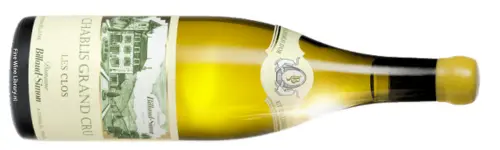
The largest and most celebrated of the seven Grand Crus, Les Clos produces the most powerful, structured and age-worthy wines on the hillside. Its combination of mineral intensity, complexity and longevity has made it the definitive benchmark of the appellation, and it is the Grand Cru from which the most celebrated bottles of Chablis have consistently come. Leading expressions are produced by Domaine François Raveneau, Vincent Dauvissat, Domaine William Fevre, Domaine Samuel Billaud, Jean-Paul & Benoît Droin and Domaine Billaud-Simon. Within Les Clos, Christian Moreau Pere et Fils produces the unique Clos des Hospices, a single-parcel bottling from a specific historic section that no other producer vinifies separately.
Vaudesir
Centrally positioned on the Grand Cru hillside, Vaudesir combines richness and mineral definition with excellent aromatic complexity, often considered one of the more approachable Grand Crus in youth whilst still possessing the structure for long development. Outstanding expressions from Domaine William Fevre, Patrick Piuze, Jean-Paul & Benoît Droin and Christian Moreau Pere et Fils.
Valmur
Rich, complex and deeply mineral, Valmur sits at the heart of the Grand Cru hillside and produces wines that combine textural richness with the mineral intensity expected at this level. Domaine François Raveneau, Jean-Paul & Benoît Droin and Christian Moreau Pere et Fils produce outstanding examples.
Blanchot
At the eastern end of the hillside, Blanchot produces the most floral and aromatically expressive of the seven Grand Crus, combining immediate perfume with genuine mineral depth and structural development over fifteen or more years. Leading expressions from Domaine François Raveneau, Domaine William Fevre, Domaine Samuel Billaud and Domaine Billaud-Simon.
Les Preuses
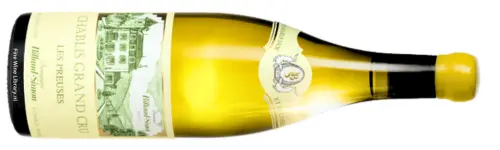
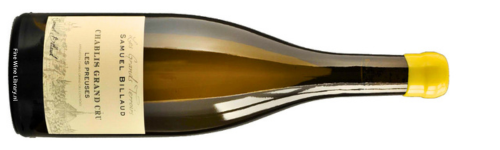
Adjacent to Les Clos, Les Preuses produces wines of aromatic complexity and real mineral intensity, combining the power of its position with a finesse and precision that place it among the most complete expressions on the hillside. Vincent Dauvissat, Domaine William Fevre and Domaine Samuel Billaud produce outstanding versions.
Bougros
At the western end of the hillside, Bougros produces the most structured and austere of the seven Grand Crus, with wines of impressive mineral tension and longevity. Domaine William Fevre's Cote de Bouguerots selection, from the finest parcel within the vineyard, is among the most celebrated single-site expressions in the appellation.
Grenouilles
The smallest of the seven Grand Crus at just 9.7 hectares, Grenouilles produces wines of notable concentration and distinctive mineral character from a site that benefits from exceptional sun exposure. Jean-Paul & Benoît Droin and Domaine William Fevre produce compelling examples.
Style of Wine
Classic Chablis displays aromas of lemon, green apple, white flowers and wet stone, underpinned by vibrant acidity and a saline, almost oyster-shell mineral finish. Oak influence, where used, tends to be subtle and supportive rather than dominant, preserving the freshness and transparency that are the hallmarks of the appellation.
With bottle age, the wines develop greater complexity, revealing notes of honey, hazelnut, flint, beeswax and toasted brioche whilst retaining their characteristic mineral tension. The finest Grand Cru and Premier Cru examples can continue developing for twenty or thirty years in the cellar, revealing a depth of character that places them among the most compelling aged white wines produced anywhere in the world.
It is this combination of purity, precision and longevity that has established Chablis as one of the world's great white wine regions.
The Great Producers of Chablis
The undisputed benchmark of Chablis and one of the world's most sought-after producers. Bernard and Jean-Marie Raveneau continue their father's philosophy of absolute mineral purity, generational vineyard knowledge and zero compromise, producing Grand Cru and Premier Cru wines of extraordinary depth and longevity that have defined the appellation for decades.
Standing alongside Raveneau as one of the two benchmark producers of Chablis, Dauvissat produces wines of even greater austerity and mineral precision, demanding patience but rewarding it with an intellectual depth and complexity that places the finest bottles among the greatest white wines in Burgundy.
The largest holder of Grand Cru vineyards in Chablis, with significant parcels across all seven Grand Crus, now backed by the resources of Domaine Faiveley. William Fevre provides collectors with the most comprehensive single-producer survey of Grand Cru Chablis character, produced with consistent quality and genuine mineral precision.
The most compelling newer voice in Chablis, a Canadian-born winemaker who has built one of the most discussed and consistently excellent portfolios of Grand Cru and Premier Cru Chablis, applying a rigorously reductive and mineral philosophy across a broad range of the appellation's finest sites.
One of Chablis' most respected family estates, with significant Grand Cru holdings across six sites and a consistently excellent Premier Cru range, now producing wines of increasing precision and mineral definition under Benoît Droin's direction.
An independent project of genuine quality and philosophical rigour, established from the 2009 vintage by Samuel Billaud following his departure from the family estate. Producing mineral-precise Grand Cru and Premier Cru Chablis from excellent sources with a rigorously low-intervention approach.
A historic family estate with exceptional Grand Cru terroir including Les Clos, Blanchot, Vaudesir and Les Preuses, now owned by Domaine Faiveley and producing wines of consistent quality backed by significant investment in vineyards and cellar.
A distinguished family estate led by Fabien Moreau, combining significant Grand Cru holdings across five sites with the unique Clos des Hospices, a historic single-parcel bottling from within Les Clos that no other producer in Chablis makes separately.
Which Chablis Should I Buy?
Whether you are discovering white Burgundy for the first time or seeking one of the world's most profound expressions of mineral Chardonnay, Chablis offers exceptional choices at every level.
New to Chablis?
Village Chablis and Petit Chablis provide the perfect introduction, combining the freshness, salinity and mineral character that define the appellation with excellent value and immediate drinkability. Producers such as Patrick Piuze and Jean-Paul & Benoît Droin offer outstanding village wines that honestly represent the Chablis style.
Looking for outstanding value?
Premier Crus such as Montée de Tonnerre, Fourchaume and Vaillons deliver remarkable complexity and ageing potential at prices that represent genuinely compelling value relative to the Grand Crus. Producers including Domaine Samuel Billaud, Jean-Paul & Benoît Droin and Christian Moreau Pere et Fils produce Premier Cru wines of outstanding quality at prices that reflect their growing but not yet fully established international profiles.
Building a serious collection?
For collectors seeking the very best, the Grand Crus of Chablis, and Les Clos in particular, represent some of the most extraordinary and age-worthy white wines in the world. Domaine François Raveneau and Vincent Dauvissat are the essential references at this level, with Domaine William Fevre providing the most accessible and comprehensive survey of Grand Cru character at a production scale that makes allocations genuinely available.
Why Buy Chablis from Fine Wine Library?
Chablis offers something that no other white wine region in the world quite replicates: the combination of Kimmeridgian limestone precision, a cool continental climate and a long tradition of minimal-intervention winemaking that produces Chardonnay of extraordinary mineral purity and longevity. From the accessible freshness of Petit Chablis through to the profound complexity of the finest Grand Crus, the appellation rewards collectors who take the time to understand its hierarchy and its producers.
At Fine Wine Library, we focus on producers who faithfully express the individuality of the Chablis terroir, from the benchmark estates of Raveneau and Dauvissat to the most compelling newer voices. Every bottle is sourced with a focus on provenance, condition and long-term potential.
All Chablis wines purchased through Fine Wine Library are held In Bond, excise duty free, with guaranteed provenance.
Frequently Asked Questions
Why is Chablis so different from other white Burgundy?
Chablis is geographically isolated from the rest of Burgundy and is planted on Kimmeridgian limestone soils of a type not found in the Cote d'Or. Combined with a cooler climate and a tradition of minimal oak influence, this produces Chardonnay of a mineral precision and salinity that is genuinely unique and immediately recognisable.
What does Chablis taste like?
Classic Chablis displays lemon, green apple, white flowers and a distinctive mineral, almost oyster-shell quality, underpinned by vibrant acidity. With age, the finest examples develop hazelnut, honey, flint and toasted brioche notes whilst retaining their characteristic freshness and mineral tension.
What are the seven Grand Crus of Chablis?
The seven Grand Crus are Les Clos, Vaudesir, Valmur, Blanchot, Bougros, Grenouilles and Les Preuses, all situated on a single south-west facing hillside overlooking the town of Chablis. Les Clos is generally considered the most powerful and age-worthy.
How long should Chablis be cellared?
Petit Chablis and village Chablis are typically at their best within five years. The better Premier Crus benefit from eight to fifteen years of cellaring. The Grand Crus from the finest producers, and Les Clos in particular, often require a decade before they begin to open and can continue developing for twenty-five or thirty years in the finest vintages.
Which producers should I look for?
The two undisputed benchmarks are Domaine François Raveneau and Vincent Dauvissat. Domaine William Fevre offers the most accessible Grand Cru range. Patrick Piuze is the most compelling newer voice. Christian Moreau Pere et Fils produces the unique Clos des Hospices bottling within Les Clos.
Explore More Burgundy
Buy Chassagne-Montrachet Wine
Buy Vosne-Romanee Wine
Buy Gevrey-Chambertin Wine
Buy Burgundy Wine
Chablis Premier Cru vs Grand Cru
Raveneau vs Dauvissat
Understanding Kimmeridgian Limestone
How to Start Collecting White Burgundy
Ultimate Guide to Burgundy Wine