
June 20, 2024
Grande Marque Champagne Houses: The Top 10 You Need to Know
Category: Champagne, Fine Wine
The term Grande Marque — literally "great brand" — refers to the most prestigious and historically established houses in the Champagne region. Formalised through the Union des Maisons de Champagne (UMC) from 1882, the designation encompasses the producers who have set the standard for Champagne quality and style across generations, with access to the finest vineyard sources, the largest reserve wine libraries, and the resources to maintain consistency at scale. These are the houses whose names define the category for most of the world — and whose flagship cuvées remain essential points of reference for any serious collector or enthusiast.
Moët & Chandon
Founded in 1743, Moët & Chandon is the world's largest Champagne producer and the house most people encounter first. Its flagship Impérial non-vintage is the best-selling Champagne globally — a blend of Pinot Noir, Pinot Meunier, and Chardonnay designed for immediate pleasure and broad appeal. The house's greatest expression is Dom Pérignon, a separate prestige cuvée produced only in exceptional years, which has become one of the most critically acclaimed and collectible Champagnes in the world.
Veuve Clicquot
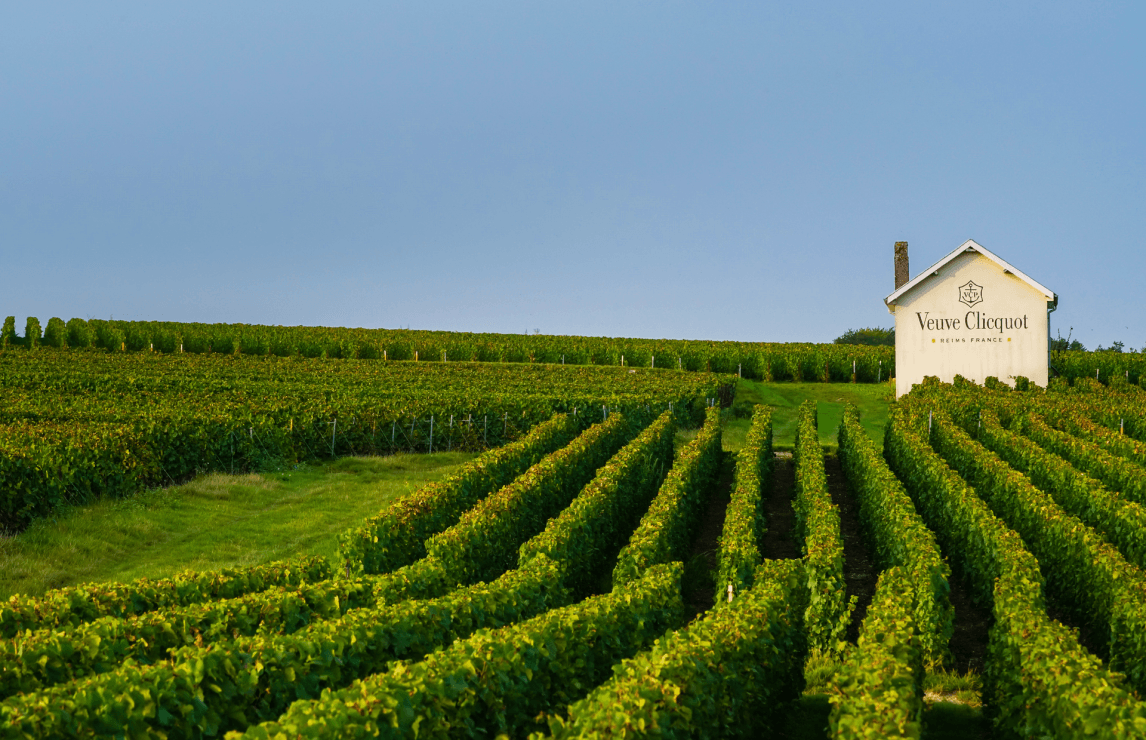
Established in 1772, Veuve Clicquot is celebrated for both its wines and its history — specifically the role of Barbe-Nicole Ponsardin, the "Grande Dame of Champagne," who took over the house at 27 after the death of her husband and transformed it into one of the most innovative producers of the 19th century. Her invention of the riddling table (pupitre) revolutionised the production of clear Champagne. The house's signature Yellow Label Brut is Pinot Noir-dominant, full-bodied, and celebrated for its structure and depth.
Dom Pérignon
Named after the Benedictine monk associated with the early development of Champagne, Dom Pérignon is the prestige cuvée of Moët & Chandon and one of the most celebrated luxury wines in the world. It is produced exclusively in exceptional vintage years, using only that year's harvest — no reserve wines — and blending Chardonnay and Pinot Noir in proportions that vary by year to capture the character of each exceptional season. It is known for its elegance, minerality, and remarkable ageing potential. For a complete overview of Dom Pérignon's vintages and the Plénitude ageing programme, see our Dom Pérignon vintage guide.
Krug
Founded in 1843, Krug is the Grande Marque most devoted to producing exclusively prestige-level Champagne. Its flagship Grande Cuvée is a blend of over 120 wines from more than ten different vintages, fermented in small oak barrels and aged for a minimum of six years — a labour-intensive approach that produces a wine of extraordinary richness, complexity, and depth. The Grande Cuvée is among the most discussed and collected non-vintage Champagnes in the world. For more on Krug's range and Editions system, see our Krug Editions guide.
Bollinger
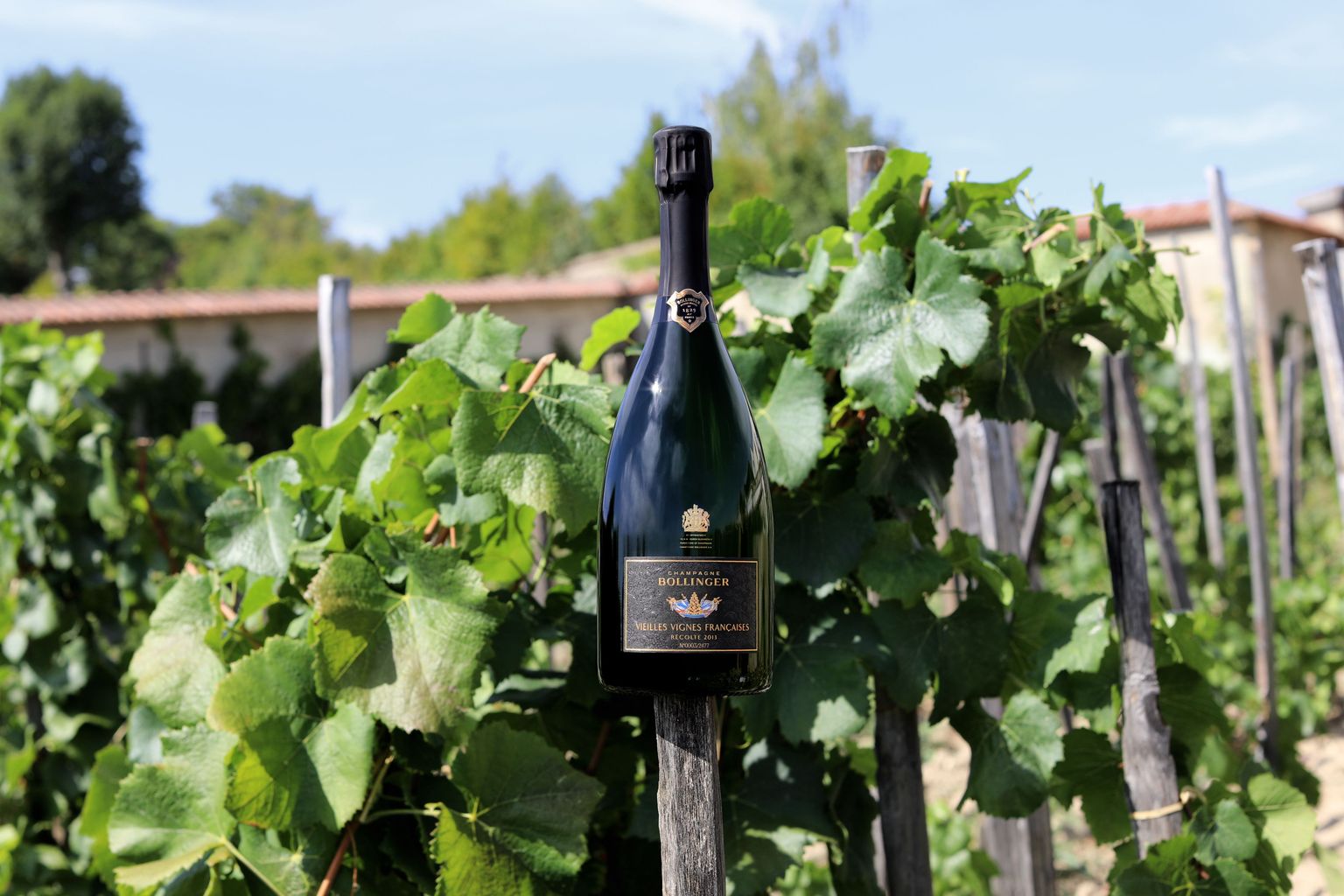
Established in 1829, Bollinger is one of the few remaining major Champagne houses that is still family-owned, and its commitment to traditional methods — including fermenting its reserve wines in magnums and ageing its flagship Special Cuvée for three years — gives its wines a distinctive richness and vinosity. The house emphasises Pinot Noir from Grand Cru and Premier Cru vineyards, producing wines of notable full-bodied structure and depth. Its prestige cuvée, La Grande Année, is one of the most age-worthy vintage Champagnes available.
Louis Roederer
Founded in 1776, Louis Roederer is best known for Cristal — the prestige cuvée created in 1876 for Tsar Alexander II, which remains one of the most famous and collectible Champagnes in the world. The house controls extensive vineyard holdings, giving it significant autonomy over quality from vineyard to glass. Its wines are characterised by freshness, complexity, and precise balance, with notes of citrus, white flowers, and minerals. Roederer has also become a leader in biodynamic viticulture within the region.
Taittinger
Established in 1734, Taittinger is one of the few major Champagne houses still owned by the founding family. It uses a notably high proportion of Chardonnay across its range — particularly in its prestige cuvée Comtes de Champagne Blanc de Blancs, which is sourced exclusively from Grand Cru Chardonnay of the Côte des Blancs and aged for ten years before release. The Comtes is one of the benchmark Blanc de Blancs Champagnes, celebrated for its elegance, aromatic refinement, and longevity.
Pol Roger
Founded in 1849 and remaining family-owned today, Pol Roger is perhaps best known as the preferred Champagne of Sir Winston Churchill, who reportedly consumed an estimated 42,000 bottles of it during his lifetime. The house's Cuvée Sir Winston Churchill is produced only in the finest vintages and aged for a minimum of eight years, developing the full-bodied, complex character associated with great mature Champagne. Its Brut Réserve White Foil is a reliable and beautifully balanced non-vintage.
Browse Champagne
View all available Champagne →
Related Reading
Champagne regions explained | How Champagne is made | Dom Pérignon vintage guide | Krug Editions explained