
May 20, 2024
How Champagne Is Made: The Méthode Champenoise Explained

Category: Champagne, Fine Wine
The bubbles in a bottle of Champagne are not added at the end of the process. They are created inside the sealed bottle, through a second fermentation that takes place months or years after the wine was first made — a process so specific and so labour-intensive that it has its own name, the Méthode Champenoise, and that name is legally protected as a term only applicable to wines from the Champagne appellation itself. Understanding this process is the most direct route to understanding why great Champagne tastes and behaves differently from any other sparkling wine.
Grape Harvesting
Champagne production begins in September, when Chardonnay, Pinot Noir, and Pinot Meunier — the three permitted varieties — are harvested by hand across the region's 34,000 hectares of vineyards. Hand harvesting is not optional: whole-cluster pressing requires intact bunches, and the delicate extraction of clear juice from dark-skinned grapes (Pinot Noir and Meunier) demands that the grapes arrive at the press house undamaged.
Timing is critical. Champagne's marginal northern climate means that the window between underripe and overripe grapes is narrow, and the balance between sugar and acidity at harvest determines the character of the base wine.
Pressing and Primary Fermentation
The grapes are pressed gently and quickly. For Champagne, the press cycle follows strict regulations — only a limited quantity of juice may be extracted before the press run must stop, to avoid extracting bitter compounds from the skins and seeds. The resulting clear or lightly coloured juice (the moût) is clarified before fermentation begins.
Primary fermentation takes place in stainless steel tanks at most houses, though a small number of producers — most notably Krug — ferment in small oak barrels, which adds complexity and a subtle richness to the base wine. The result of primary fermentation is a dry, still wine called vin clair — high in acidity, low in alcohol, often sharp and austere on its own, but containing the raw material from which great Champagne will eventually be made.
Blending: The Heart of the Method
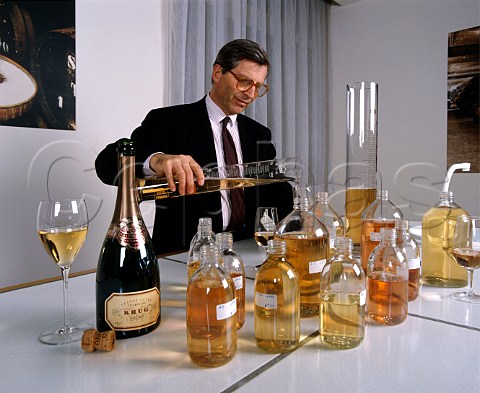
Assemblage, or blending, is where the greatest skill in Champagne production is exercised. The cellar master combines base wines from different grape varieties, different villages, and different years to create the blend that will become the final wine. For non-vintage Champagne, reserve wines — wines held back from previous harvests — are critical to maintaining the house style across years that vary considerably in character. Dom Pérignon uses no reserve wines, making it a pure statement of the vintage year; most other prestigious houses blend extensively.
The blended wine is bottled with a small addition of sugar and yeast — the liqueur de tirage — and sealed with a temporary crown cap.
Secondary Fermentation and Lees Ageing
This is where Champagne's defining characteristic is created. Sealed in the bottle, the added yeast consumes the added sugar, producing a small but significant amount of additional alcohol and, crucially, carbon dioxide. Because the bottle is sealed, the CO2 cannot escape — it dissolves into the wine, creating the pressure (typically around six atmospheres) that produces the bubbles when the bottle is eventually opened.
Once the secondary fermentation is complete, the dead yeast cells (the lees) settle in the bottle, and the wine begins a slow ageing process in contact with them. This lees contact — sur lattes ageing — is where Champagne develops the toasty, biscuity, and creamy qualities that distinguish it from simpler sparkling wines. Non-vintage Champagne must age for a minimum of 15 months; vintage Champagne requires at least three years. The finest houses hold their wines far longer — Dom Pérignon ages for a minimum of seven years, while the P2 Plénitude releases age for fifteen or more.

Riddling and Disgorging
At the end of the ageing period, the lees must be removed from the wine. Riddling (remuage) achieves this by gradually tilting and rotating each bottle — originally by hand on a wooden riddling rack, now often by machine using gyropalettes — until the bottle is inverted and all the sediment has settled against the crown cap at the neck.
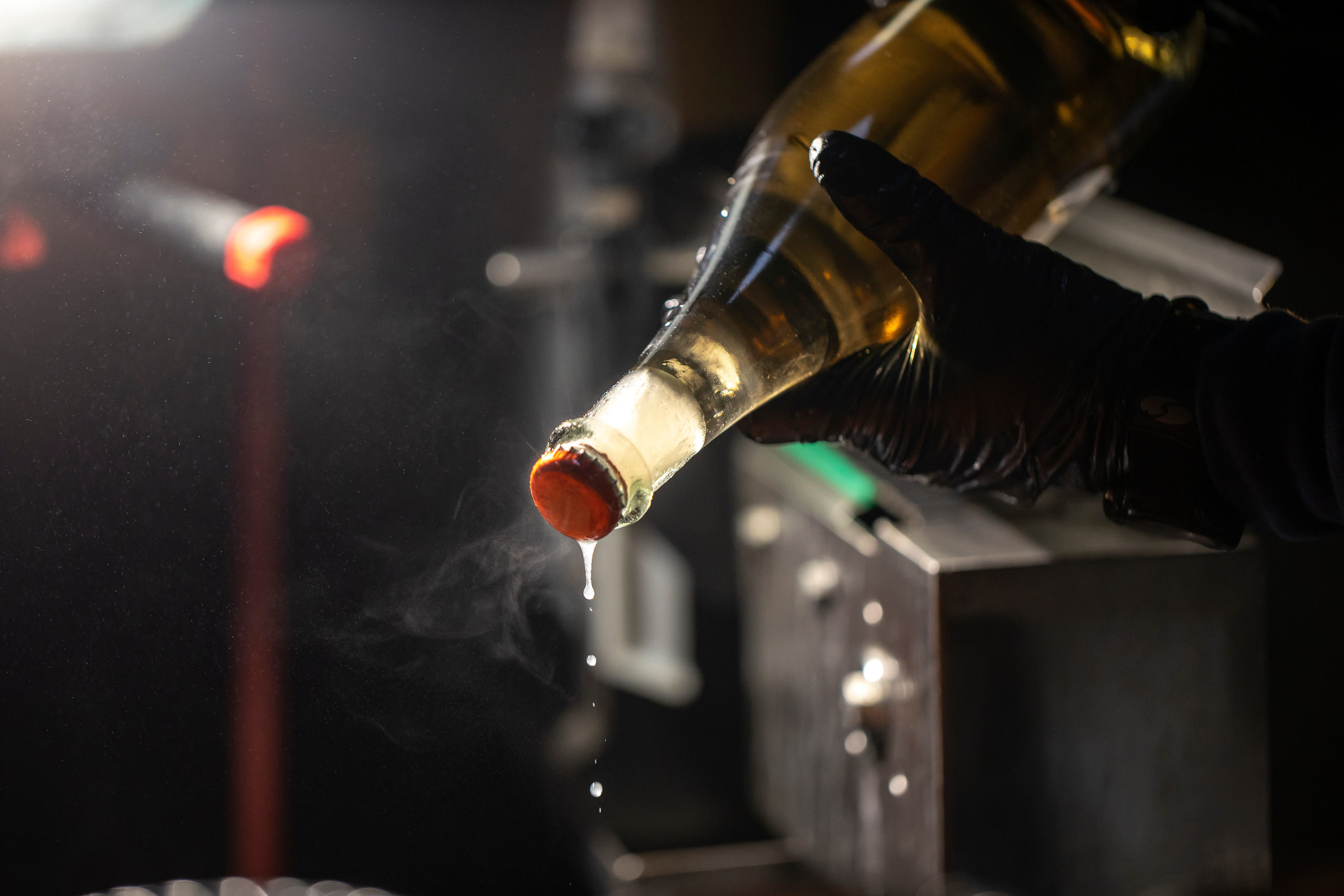
Disgorging (dégorgement) removes the sediment by briefly freezing the neck of the bottle, forming a plug of ice that contains the accumulated lees. When the crown cap is removed, the pressure in the bottle ejects the ice plug, leaving the wine brilliantly clear.
Dosage and Final Corking
The small amount of wine lost during disgorging is replaced by the liqueur d'expédition — a mixture of wine and sugar whose composition determines the final sweetness level of the Champagne. Most prestige Champagnes are bottled as Brut (minimal sugar addition); some are Extra Brut or Brut Nature (no addition at all). The bottle is then corked with its distinctive mushroom-shaped cork, wired in place, and given a final period of ageing before release.
The entire process — from harvest to release — spans a minimum of 15 months for non-vintage and three years for vintage Champagne, and considerably longer for the finest expressions. That investment of time is what makes Champagne, technically and experientially, unlike any other sparkling wine.
Browse Champagne
View all available Champagne →
Related Reading
Champagne regions explained | Grande Marques Champagne houses | Top Champagne vintage years