
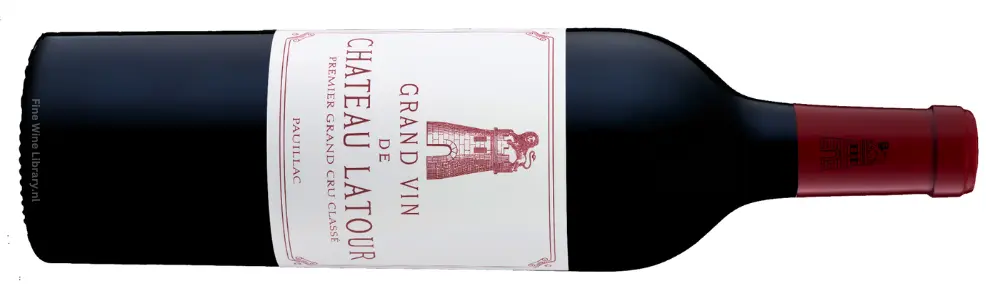
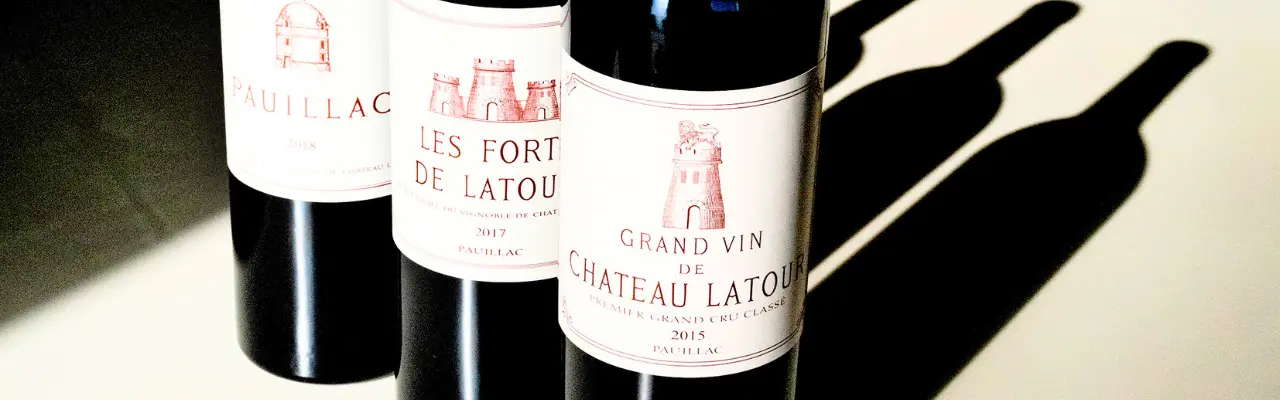
Chateau LatourBordeaux, France
Showing 1–3 of 3 wines
If Bordeaux has a wine that rewards patience above all else, it is Chateau Latour. Defined by its power, precision, and extraordinary ageing capacity, it is widely regarded as the most structured and long-lived wine in the Médoc. For collectors, Latour is less about immediate charm and more about certainty — a wine built for decades, not years.
Located at the southern edge of Pauillac, close to the Gironde estuary, the estate benefits from one of the most consistent and distinctive terroirs in Bordeaux. This is a property where site, variety, and winemaking align with rare clarity, producing wines of remarkable depth, tension, and longevity.
The History of Chateau Latour and the 1855 Classification
The history of Chateau Latour dates back to the 14th century, with its name derived from the tower that once stood on the estate. By the 18th century, it had already established itself as one of Bordeaux's leading wines, long before its classification as a Bordeaux First Growth in 1855.
Modern Latour has been shaped by an uncompromising focus on quality. Since its acquisition by François Pinault in 1993, significant investment has refined vineyard practices and cellar precision, always with the aim of expressing terroir with greater clarity.
A defining moment came in 2012, when the estate withdrew from the Bordeaux En Primeur system, choosing instead to release wines only when fully ready to drink — a decision that has strengthened its secondary market positioning and provenance story.
The Enclos: One of Bordeaux's Greatest Terroirs
At the heart of the estate lies the Enclos, a 47-hectare vineyard that forms the backbone of the Grand Vin. The terroir is classic Pauillac, but taken to its extreme. Deep gravel soils deposited by the Garonne provide exceptional drainage, encouraging root systems to reach deep into the earth. The estate's proximity to the Gironde moderates temperature and reduces frost risk, allowing for long, even ripening across almost every vintage.
Cabernet Sauvignon dominates the blend, thriving in these conditions and producing wines of structure, depth, and remarkable ageing potential. This terroir is the foundation of Latour's consistency, even in challenging vintages.
Winemaking at Chateau Latour
Winemaking at Chateau Latour is defined by precision and restraint. Each parcel is vinified separately, allowing the nuances of the vineyard to be expressed with clarity. The Grand Vin is aged in 100 percent new French oak, with careful extraction ensuring structure without excess. Selection is rigorous — only the finest lots from the Enclos are included, with the remainder forming Les Forts de Latour and Pauillac de Latour.
The philosophy is simple: every decision is made with longevity in mind.
Style and Character — Latour vs Other First Growths
Among the Bordeaux First Growths, Chateau Latour is the most architectural — powerful in youth, yet capable of extraordinary complexity with age. Latour develops graphite, cedar, tobacco, and layered dark fruit over decades. It is rarely at its best before fifteen to twenty years of age in the finest vintages.
To understand where Latour sits among its peers, it helps to consider each in turn. Chateau Lafite Rothschild is the most refined and aromatic of the five, defined by precision and finesse above all else. Chateau Mouton Rothschild is opulent and richly fruited, with a distinctive boldness that makes it the most approachable of the Pauillac three in relative youth. Chateau Margaux is the most elegant and perfumed, the floral counterpoint to Pauillac's power. And Chateau Haut-Brion, the outlier from Pessac-Léognan, offers a smoky, earthy complexity no other First Growth replicates. Latour sits apart from all of them — more austere, more structured, and more demanding of patience than any of its peers.
Best Vintages of Chateau Latour
The consistency of Chateau Latour across difficult conditions is unmatched, yet certain vintages stand conspicuously apart. The 2016 is widely considered one of the greatest Latours in a generation — precise, tensile, and built to outlast almost everything in any serious cellar. The 2010 is monumental in structure, a wine that rewards only the most patient collectors. The 2019 combines the power of a classic Latour with a freshness and lift that makes it marginally more accessible in relative youth. The 2000 is now entering a superb drinking window, showing the cedary depth that defines great Pauillac at maturity. The 1996 remains a benchmark for classic Left Bank structure and is still evolving.
Even in less heralded vintages, the estate's rigorous selection process ensures the Grand Vin remains one of Bordeaux's most reliable performers.
Investment and Collectability
Chateau Latour remains one of the most sought-after wines on the secondary market. Its 2012 decision to leave En Primeur has strengthened its positioning — wines are released with guaranteed provenance and at a stage where the estate considers them ready to drink. For collectors, Latour represents both security and long-term value. It is a cornerstone for any serious Bordeaux cellar, alongside the other Bordeaux First Growths.
Latest Chateau Latour Insights
Why Chateau Latour Left En Primeur
Best Vintages of Chateau Latour to Buy
Latour 2019 Release — 100 Point Precision
Latour 2016 — A Perfect Vintage Benchmark
Les Forts de Latour 2019 — Power and Structure
Latour 2015 — Seamless and Captivating
Buy Chateau Latour Wines
Explore and buy Chateau Latour, including Grand Vin and Les Forts de Latour, available for both drinking and long-term cellaring. All bottles are held In Bond, excise duty free, with guaranteed provenance.
Discover more from Pauillac, compare all Bordeaux First Growths, or browse the latest Bordeaux En Primeur releases. Whether you are building a cellar or securing a cornerstone wine, Chateau Latour remains one of Bordeaux's most dependable and compelling choices.