
April 16, 2026
Best Vintages of Chateau Latour to Buy
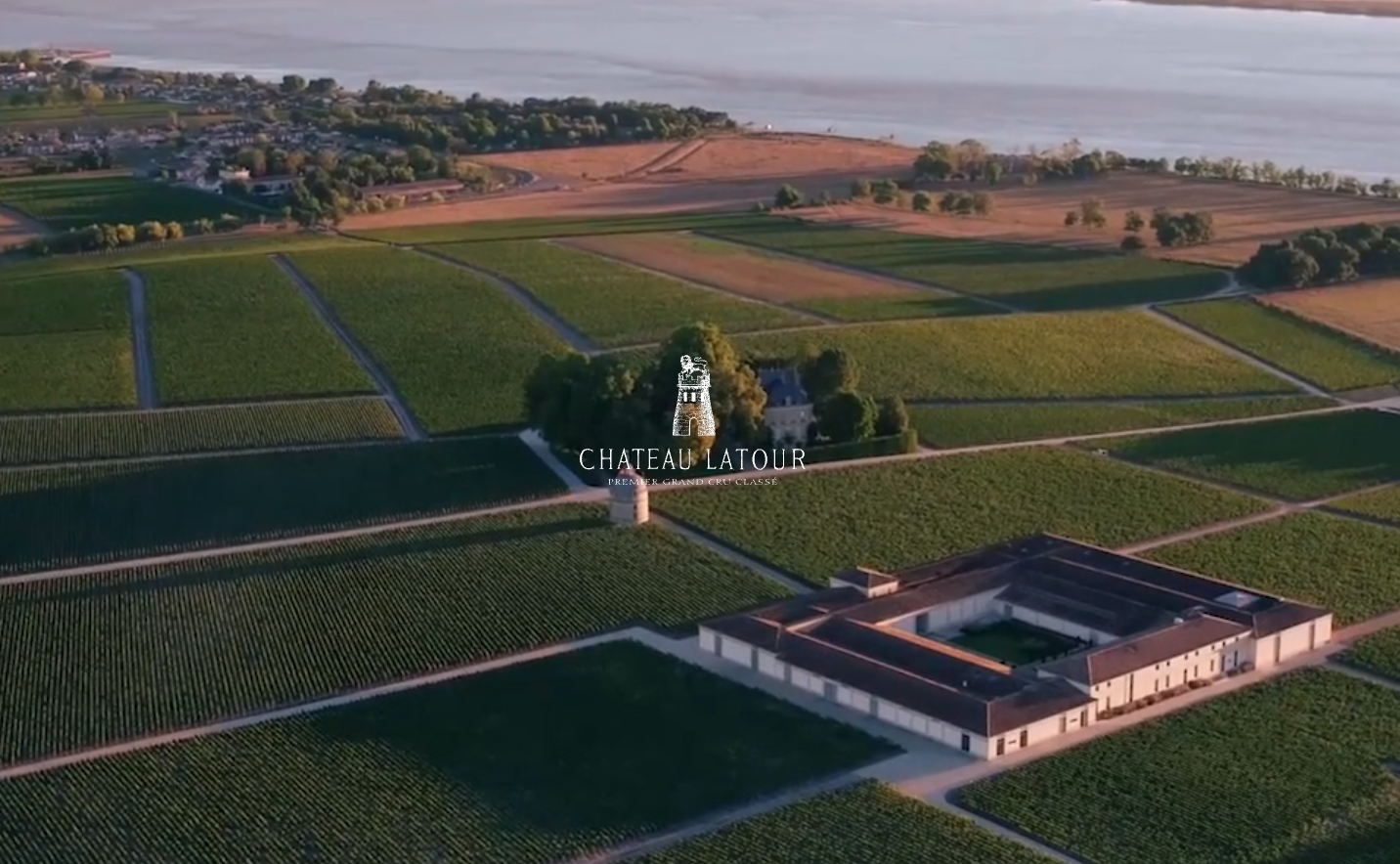
Chateau Latour is one of the most consistent estates in Bordeaux. Its deep gravel terroir in Pauillac, the discipline of the Enclos selection, and the estate's willingness to declassify in difficult years all mean that even in vintages that challenged others, Latour tends to produce something of serious quality.
But consistency is not uniformity. Across the modern era, certain vintages stand conspicuously apart — wines where the combination of exceptional growing conditions and Latour's particular style of winemaking produced results that belong in a different conversation from the standard of an already outstanding estate.
These are those vintages: what makes each one special, where they sit in their ageing arc, and how to think about adding them to your cellar.
Chateau Latour 2016 — The Benchmark
The 2016 is, by most serious accounts, one of the greatest Latours ever produced. It received multiple 100-point scores across major critics and has been described in terms usually reserved for a handful of wines per generation. What makes it extraordinary is not just its power — Latour is always powerful — but the precision and tension that sits beneath it.
The 2016 growing season delivered a cool, slow ripening period that allowed Cabernet Sauvignon to develop concentration without losing freshness. The result is a wine of almost architectural tension: dark, graphite-edged, with tannins that are formidable but finely delineated, and a finish that seems to extend without limit. It is emphatically not ready. It will not be ready for many years. But for collectors buying for the long term, the 2016 is as close to a certainty as Bordeaux produces.
When to drink: 2035–2060+ Buy it if: You are building a twenty-year-plus cellar position.
Chateau Latour 2019 — Power Meets Freshness
The 2019 is the most recently released back vintage from Latour and has been widely celebrated as one of the great modern expressions of the estate. It received 100 points and was released by the château in 2026, nearly seven years after harvest — which, by Latour's standards, is still relatively early.
What distinguishes the 2019 from the 2016 is a slightly more open, generous quality — still unmistakably Latour in its structure and concentration, but with a lift and freshness that makes it marginally more approachable in the shorter term. This is partly vintage — 2019 was a warm, generous year — and partly a reflection of the precision with which the estate now manages each parcel.
For collectors who find the 2016 almost intimidatingly closed, the 2019 offers an equally serious proposition with a slightly shorter patience requirement.
When to drink: 2030–2055+ Buy it if: You want a 100-point Latour with an earlier projected drinking window than the 2016.
Chateau Latour 2010 — Monumental
The 2010 is one of the great Bordeaux of the modern era, and Latour's version is among the finest wines the estate has produced in the past thirty years. The vintage delivered exceptional concentration across the Left Bank, and Latour's response was a wine of almost overwhelming structure: dense, inky, with tannins that remain remarkably unyielding more than fifteen years after harvest.
It is not quite there yet, even now. Those who have opened bottles in the last two or three years report something extraordinary beginning to emerge — graphite, dark fruit, truffle, a depth that seems to grow rather than fade — but most serious tasters advise continued patience. In ten years it will be superb. In twenty, it will be one of the great bottles.
The 2010 is harder to find than the 2016 or 2019 given its age and the fact that it was released through the En Primeur system before the estate's 2012 departure. Provenance matters here: buy from merchants who can document the storage chain.
When to drink: 2028–2060+ Buy it if: You want the most powerful Latour of the modern era and are prepared for a long wait.
Chateau Latour 2000 — Entering its Window
The 2000 is now approaching something close to its peak, and those who have held bottles from release are beginning to be rewarded for their patience. The millennial vintage was hyped on release and delivered: a wine of classical Pauillac character, with the cedary, cigar-box complexity that defines great Latour at maturity beginning to emerge clearly.
At over twenty years of age, the 2000 has the additional advantage of being more easily assessed than younger vintages — you can buy it knowing, with reasonable confidence, what you are getting and when it will be at its best. Secondary market availability is reasonable, though again, provenance matters enormously at this age.
When to drink: 2025–2045 Buy it if: You want a Latour you can open in the next five to ten years with full confidence.
Chateau Latour 1996 — The Classic Left Bank Benchmark
In any discussion of classic Pauillac, the 1996 eventually comes up. It was a year that suited the Left Bank's Cabernet Sauvignon more than almost any other vintage of the 1990s: a long, cool ripening season that produced wines of brilliant structural precision. Latour's version is one of the finest in its peer group.
The 1996 has been slow to open — this is Latour, so that is expected — but at nearly thirty years of age it is now delivering what patient collectors waited for: cedar, graphite, dark cherries, tobacco, and a mineral spine that never entirely softened but has integrated beautifully into the whole. It is drinking well now, will continue to drink well for another fifteen to twenty years, and represents one of the finest expressions of what traditional Bordeaux winemaking and great terroir can produce together.
Availability on the secondary market is limited and price reflects the vintage's reputation. Provenance is critical at this age.
When to drink: Now–2040 Buy it if: You want a great Latour to drink in the near term, or to mark an occasion requiring a wine with genuine historical weight.
What About Lesser Vintages?
One of Latour's defining qualities is its performance in difficult years. The Enclos's deep drainage and vine maturity give the estate a buffer against climatic extremes that younger vineyards, and shallower soils, do not have. In years like 2011, 2012, and 2014 — all of which challenged many Médoc properties — Latour still produced wines of considerable quality, albeit at a lower price point and with a shorter ageing arc.
For collectors who want to explore Latour without the commitment of a significant fine-vintage purchase, these lesser years offer a genuine entry point to understanding the estate's style.
Buying Latour: Practical Considerations
Since leaving En Primeur in 2012, Latour releases its wines directly from the château in bottle. This means there are no futures to buy — all available stock is either from back vintages bought at En Primeur before 2012, or from château releases since then.
Provenance is more important for Latour than for almost any other wine. The estate has gone to considerable lengths to control its own distribution since 2012, and releases come with documentation. For older vintages bought on the secondary market, storage history matters — a poorly stored 1996 is a very different proposition from one that has spent its life in a temperature-controlled bonded warehouse.
Fine Wine Library holds Latour stock in bond — excise duty free — with documented provenance on every case.
View available Chateau Latour vintages → Buy Chateau Latour
Why Latour left En Primeur → Why Chateau Latour Left En Primeur
Latour vs Lafite vs Mouton → How they compare
All five Bordeaux First Growths → Bordeaux First Growths: the complete guide