
May 21, 2024
Krug Clos du Mesnil vs Clos d'Ambonnay: Which to Buy?
Category: Champagne, Krug
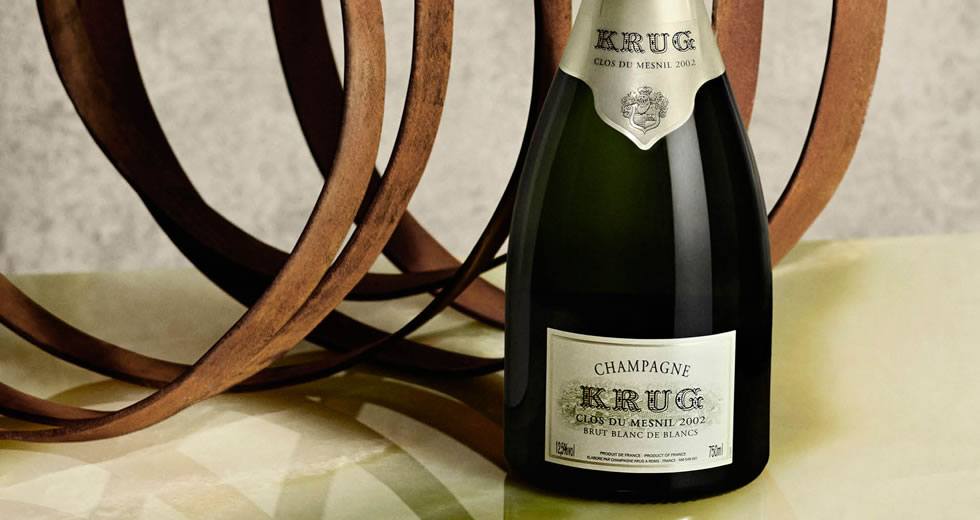
Within the Krug range — already one of the most accomplished in fine Champagne — two wines stand apart from everything else. The Clos du Mesnil and the Clos d'Ambonnay are single-vineyard Champagnes of extraordinary rarity, produced in tiny quantities from parcels so small and so specific that they constitute a category of their own. They are not simply expensive versions of the Grande Cuvée; they are fundamentally different wines, shaped by individual plots of land and by the particular character of the grape varieties that grow there. Understanding the distinction between them is to understand how far Krug's ambition extends beyond the art of blending.
The Foundation: Krug's Commitment to Terroir
Krug was founded in 1843 by Joseph Krug on a philosophy of producing the finest possible Champagne each year, regardless of the conditions of any single harvest. That philosophy found its fullest expression in the Grande Cuvée — a multi-vintage blend designed to transcend the limitations of individual years. But it also gave rise to a parallel pursuit: the exploration of what a single exceptional site could produce when treated with the same meticulous care. The Clos du Mesnil and Clos d'Ambonnay are the result of that pursuit, and they represent Krug's most uncompromising statement about what terroir means in the context of Champagne.
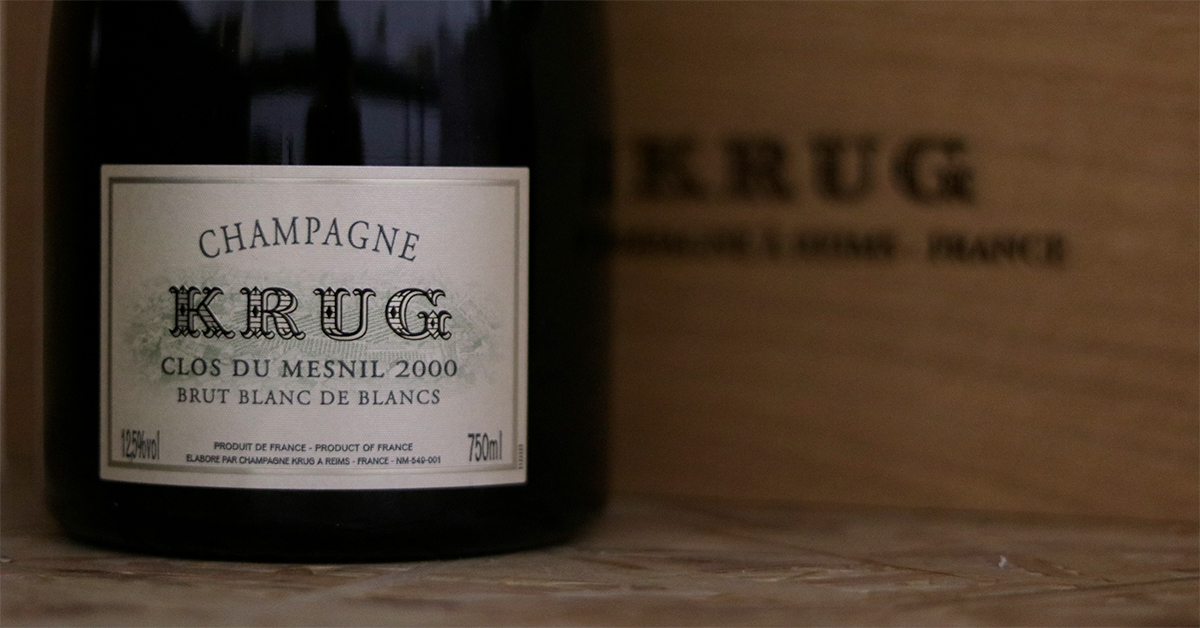
Krug Clos du Mesnil: A Blanc de Blancs of Extraordinary Purity
The Clos du Mesnil vineyard sits in the village of Mesnil-sur-Oger, in the heart of the Côte des Blancs — the region south of Épernay renowned above all others for Chardonnay of exceptional finesse and mineral intensity. The vineyard itself is tiny: just 1.84 hectares enclosed by ancient stone walls, giving it the character of a clos in the Burgundian tradition. The chalky soils provide precise drainage and impart to the Chardonnay grown here a clarity and mineral tension that is unmistakable in the wine.
Production is extremely limited. The grapes are harvested by hand, fermented in small oak barrels — as with all Krug wines — and then aged for over a decade in the cellars before release. The extended ageing allows the wine to develop the layers of complexity it is known for without losing the precision and focus that distinguish it from broader Champagnes.
In the glass, Krug Clos du Mesnil is defined by clarity. The nose shows fresh citrus, white flowers, and a subtle toast, underpinned by a chalk-driven mineral quality that is impossible to mistake for anything else. On the palate it is vibrant and focused — lemon, green apple, and a fine salinity running through to a long, precise finish. It is a wine that reveals rather than overwhelms, and its complexity deepens considerably with time in the glass. Collectors who have followed it across multiple vintages describe a wine that continues to astonish with age.

Krug Clos d'Ambonnay: A Blanc de Noirs of Depth and Power
Where Clos du Mesnil speaks the language of precision and mineral purity, Clos d'Ambonnay speaks of depth and power. The vineyard is a 0.68-hectare parcel in the village of Ambonnay in the Montagne de Reims — one of the most revered Grand Cru sites for Pinot Noir in all of Champagne. Its south-eastern exposure and deep chalk soils provide conditions that allow Pinot Noir to achieve a ripeness and structural intensity rarely seen in the region.
Like Clos du Mesnil, the wine is produced entirely from one grape variety — in this case Pinot Noir — making it a Blanc de Noirs. The hand-harvested grapes are fermented in small oak barrels and aged for an extended period in the Krug cellars, and production is even more limited than at Clos du Mesnil, with fewer than 25,000 bottles produced across all vintages since 1995.
The wine is unmistakably powerful. The nose offers red berries, plum, and spice, with nuances of brioche and almond that develop over time. On the palate it is full-bodied and expansive — cherry, raspberry, and a subtle smokiness, framed by a structure that gives the wine genuine ageing ambition. The finish is long, rich, and quietly commanding. Despite its weight, Clos d'Ambonnay retains the elegance that is the hallmark of great Champagne, and it evolves beautifully in the cellar over many years.
Clos du Mesnil vs Clos d'Ambonnay: The Key Differences
The most fundamental difference between the two wines is the grape variety — Chardonnay at Clos du Mesnil, Pinot Noir at Clos d'Ambonnay — and everything else follows from that. Chardonnay produces a Champagne that is crisp, mineral, and elegantly proportioned; Pinot Noir one that is richer, more expansive, and more structurally assertive. The terroir of each vineyard reinforces these qualities: the chalky precision of Mesnil-sur-Oger suits Chardonnay's search for focus, while the deep soils and warm exposure of Ambonnay draw out Pinot Noir's depth and intensity.
The winemaking philosophy is identical: small oak barrel fermentation, extended lees ageing, meticulous selection. What varies is the expression those methods produce when applied to different raw materials in different places. Side by side, the two wines offer one of the most compelling contrasts in Champagne — a direct comparison between Chardonnay and Pinot Noir, each taken to its absolute limit of quality and specificity.
Scarcity and Collectibility
Both wines are produced in quantities so small that availability is a persistent challenge. Clos du Mesnil releases are infrequent — only vintages considered exceptional enough to merit single-vineyard bottling are released — and allocations are limited to a small number of specialist merchants worldwide. Clos d'Ambonnay is rarer still, with a total production across all vintages that amounts to a fraction of what most estates produce in a single year. Both wines appreciate meaningfully on the secondary market and are held by serious collectors alongside the greatest still wines in the world.
For those who can access them, they represent the pinnacle of Krug's achievement and among the most singular experiences that fine Champagne has to offer.
Buy Krug
View all available Krug wines and vintages →
Related Reading
Krug Editions explained | Krug food pairing guide | Your Krug questions answered | Browse all Champagne