
June 24, 2024
Dom Pérignon History: The Legend Behind the Champagne
Category: Champagne, Dom Pérignon
Few names in fine Champagne carry the weight of Dom Pérignon. Over three centuries, the brand has evolved from the innovations of a single Benedictine monk into one of the most recognised and revered luxury wines on earth — a wine that defines what prestige Champagne can be and sets the benchmark against which others are measured. Understanding its history is not simply an exercise in appreciation. It illuminates why the wine is made the way it is, and why that approach has endured.
The Man Behind the Legend
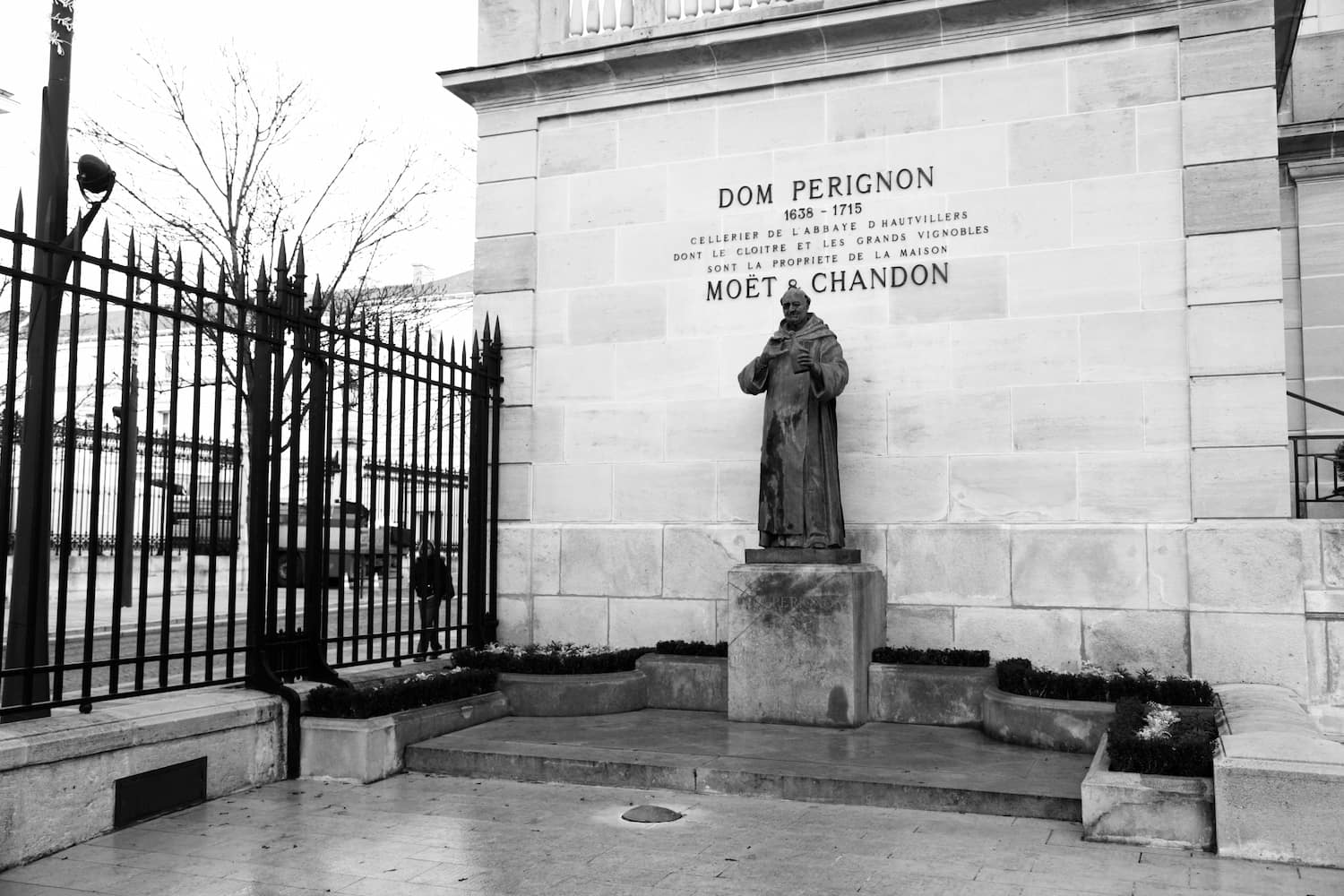
Dom Pierre Pérignon was born in 1638 in the Champagne region of France and appointed cellar master at the Abbey of Hautvillers in 1668. He would hold that position until his death in 1715 — nearly half a century of dedicated work that transformed the abbey's wines and, in the process, shaped the future of Champagne as a category. The popular account that Dom Pérignon invented sparkling wine is a simplification, but his contributions were genuine and far-reaching.
His most significant innovations concerned blending, vine management, and containment. Dom Pérignon developed a sophisticated approach to blending different grape varieties to produce a balanced and harmonious wine — a practice now fundamental to Champagne production. He refined pruning techniques to improve vine health and fruit quality, and introduced the use of thicker glass bottles and cork stoppers, which were essential for containing the pressure of sparkling wine without the bottles exploding. These were not incidental improvements. They made modern Champagne possible.
The Establishment of the Brand
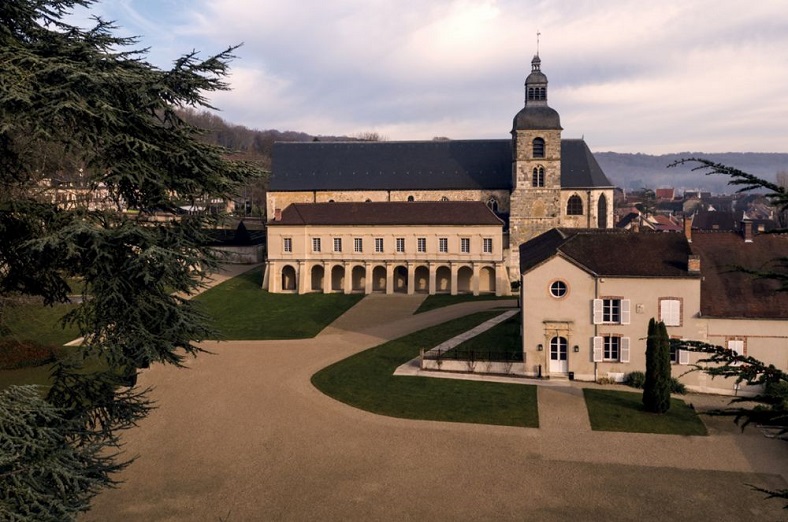
The techniques Dom Pérignon pioneered continued to influence winemaking in the Champagne region long after his death. The fame of his methods spread through the 18th century as demand for sparkling wine from Champagne grew steadily across Europe. His name became synonymous with quality and craft in a way that outlasted the abbey and the monk himself by generations.
The modern chapter of Dom Pérignon as a commercial brand began in the early 20th century, when the house of Moët & Chandon decided to create a prestige cuvée in honour of the legendary cellar master. The first vintage was released in 1936 — the 1921 — marking the beginning of Dom Pérignon's journey as a dedicated luxury offering, distinct from Moët's other Champagnes and produced only in exceptional years from the finest vineyards in the region.
Post-War Growth and Global Recognition
After World War II, Dom Pérignon gained rapid international recognition as one of the finest Champagnes in the world. Its association with celebration, prestige, and exceptional quality made it a natural choice for royal and state occasions through the 1950s, and its appearance at high-profile events across Europe and America positioned it as a cultural symbol of luxury rather than simply a fine wine. A landmark auction at Christie's in 1971, in which a bottle of Dom Pérignon 1921 sold for a record price, underscored its status as a collector's wine — a category that has only grown since.
The Plénitude Concept
One of the most significant developments in Dom Pérignon's modern history is the formalisation of the Plénitude concept — the recognition that great Champagne passes through distinct peaks of complexity as it ages, and the commitment to releasing wine at those later peaks as well as at first bottling. The P2 and P3 releases represent the Second and Third Plénitudes respectively, aged for a minimum of 15 and 25 years on the lees before disgorgement.
This approach is without parallel in the Champagne world at scale. It reflects both confidence in the quality of the underlying wine and a philosophical commitment to showing what extended time can do. The P2 2006, currently available, earned 98 points from Antonio Galloni at Vinous — a score that speaks to what the Plénitude programme achieves at its best. For a full explanation of how P2 and P3 differ from the first release, see our dedicated article on Dom Pérignon P2 and P3.
The Chef de Cave: Richard Geoffroy and Vincent Chaperon
The character of Dom Pérignon in its modern form was shaped significantly by Richard Geoffroy, who served as Chef de Cave from 1990 to 2018. Geoffroy combined technical precision with a genuine artistic sensibility — his blending decisions were characterised by extraordinary attention to detail, and his tenure saw the introduction of collaborations with artists and designers that helped cement Dom Pérignon's position at the intersection of fine wine and wider luxury culture. His influence on the Plénitude concept and on the house's approach to communicating the idea of Champagne ageing was particularly important.
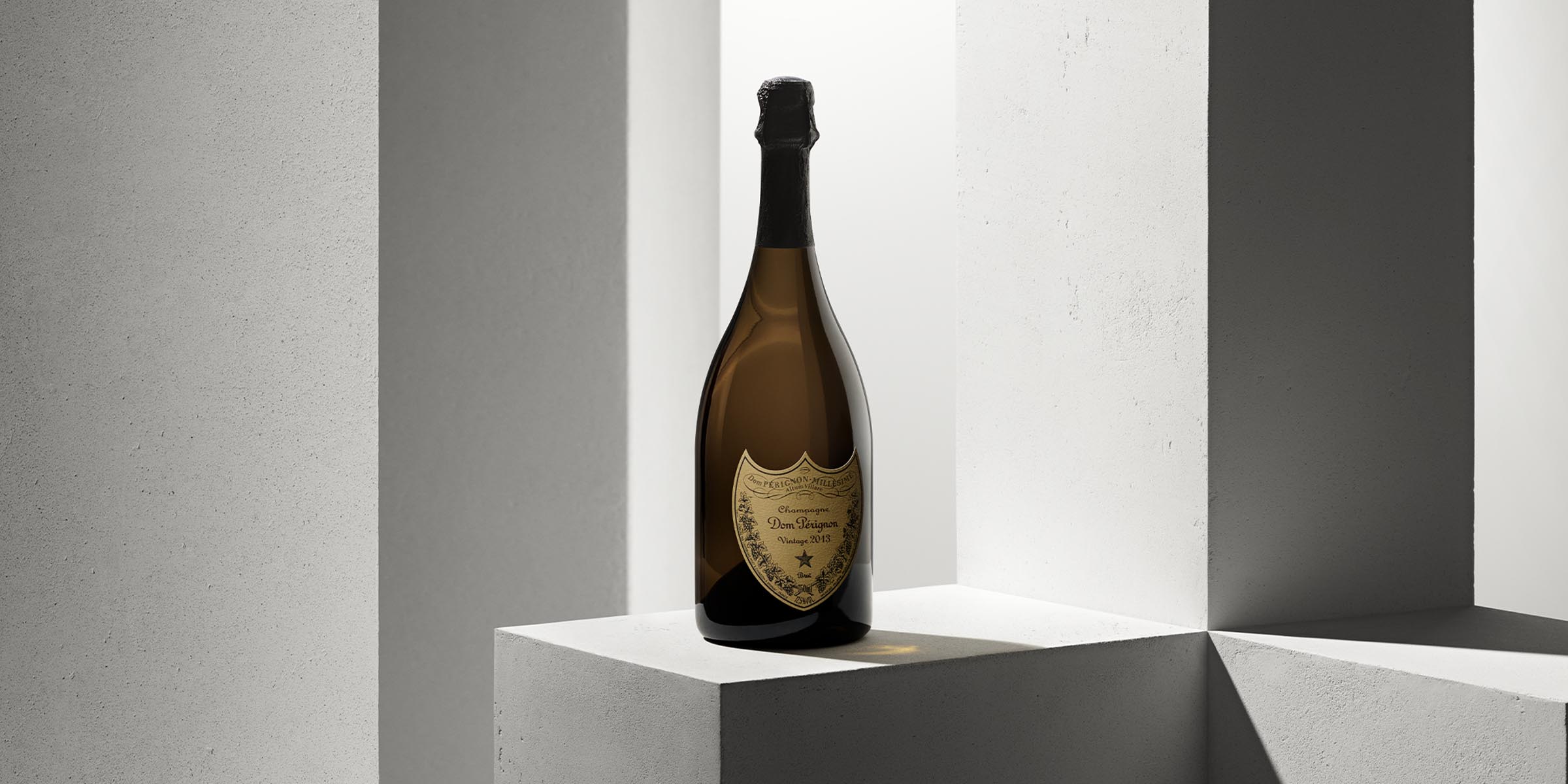
In 2019, Vincent Chaperon succeeded Geoffroy as Chef de Cave. Chaperon had worked alongside Geoffroy for many years and continues to uphold the same core philosophy: terroir-led winemaking, vintage-only production, and a commitment to showing the full potential of each year's harvest over time. Under his direction, Dom Pérignon has continued to produce some of its highest-scored releases, including the 2013 and 2012 vintages, both of which have drawn widespread critical praise.
An Enduring Standard
What the history of Dom Pérignon ultimately demonstrates is that its reputation rests on substance as much as heritage. The combination of exceptional raw material, disciplined production, and genuine ageing ambition produces wines that consistently reward those who understand them. The legacy of Dom Pierre Pérignon — the insistence on quality, on blending as an art, on taking the time to do things properly — remains visible in every vintage the house releases.
For those exploring Dom Pérignon for the first time, or deepening an existing relationship with the wine, our comprehensive vintage guide covers the key releases in detail. For guidance on how to store bottles correctly to honour their ageing potential, see our storage guide.
Buy Dom Pérignon
View all available Dom Pérignon vintages →
Related Reading
Dom Pérignon vintage guide | Dom Pérignon P2 and P3 explained | Dom Pérignon P2 2006 — 98 points | Your Dom Pérignon questions answered