
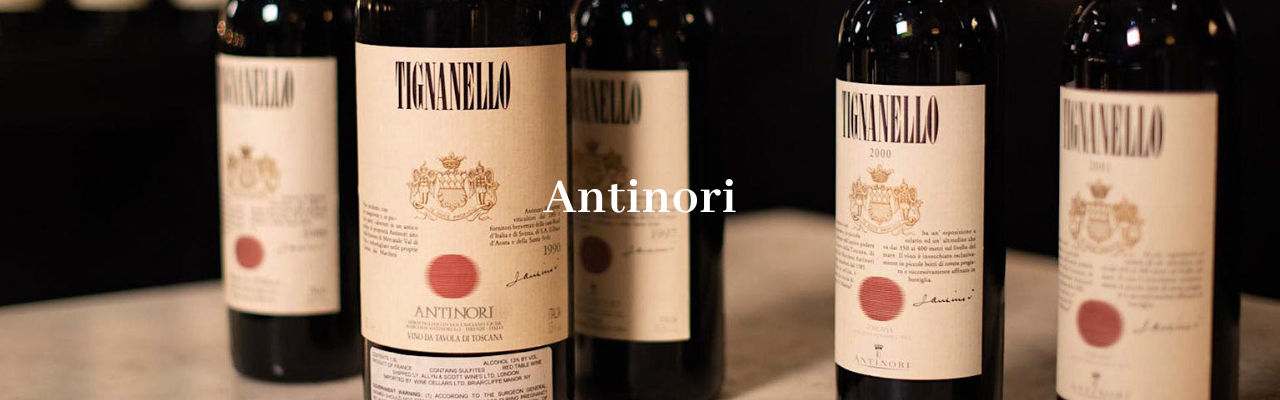
Marchesi Antinori TignanelloTuscany, Italy
Showing 1–2 of 2 wines
Tignanello is the wine that defined the Super Tuscan concept. Created by Marchesi Antinori in 1971, it was the first wine to blend Sangiovese with Cabernet Sauvignon in modern Tuscany, the first to be aged in small French barriques rather than the large Slavonian oak casks that dominated Italian cellars at the time, and one of the first to be declassified to Vino da Tavola in protest at DOC rules that prioritised bureaucratic compliance over quality.
It was, in short, a revolution in a bottle. And more than fifty years later, Tignanello remains one of the most important, consistent, and sought-after wines in Tuscany, a wine that changed Italian wine history and continues to deliver at the highest level.
The History of Tignanello and Marchesi Antinori
The Antinori family has been making wine in Tuscany since 1385, one of the longest unbroken records of wine production of any family in the world. By the mid-20th century, the family was a major force in Chianti production, but Marchese Piero Antinori grew increasingly frustrated with the restrictions of the Italian DOC system, which required Chianti to include white grape varieties and prohibited the use of small oak barrels in a way that he felt fundamentally limited quality.
In 1971, working with his winemaker Giacomo Tachis, Piero Antinori produced the first Tignanello, named after the Tignanello vineyard within the family's Santa Cristina estate in the Chianti Classico hills. It was a blend of Sangiovese (80 percent), Cabernet Sauvignon (15 percent), and Cabernet Franc (5 percent), aged in small French barriques. Because it did not comply with Chianti DOC rules, it was labelled as Vino da Tavola, a deliberate act of defiance that sent a clear message: quality, not classification, was the goal.
The wine's success was immediate and transformative. Other Tuscan producers followed, the Super Tuscan movement was born, and Antinori's role in reshaping Italian fine wine was cemented. Tignanello has been produced in every vintage since 1971, and the Antinori family remains one of the most significant forces in Tuscan fine wine today.
The Terroir of Tignanello
Tignanello is produced from a single 47-hectare vineyard, the Tignanello vineyard, within the Santa Cristina estate in the Chianti Classico hills south of Florence. The vineyard sits at altitudes between 350 and 400 metres on south and south-west facing slopes, with thin, rocky soils of galestro and alberese, the classic soils of the Chianti Classico zone.
Galestro is a crumbly, schist-like limestone rock that drains exceptionally well and stresses the vines, concentrating the fruit and producing wines of structure and aromatic definition. Alberese is a harder, more compact clay-limestone soil that contributes body and depth. The combination, at altitude on south-facing slopes, is ideal for Sangiovese, producing grapes with excellent structure, natural acidity, and the aromatic complexity that defines Tignanello's character.
The inclusion of Cabernet Sauvignon in the blend brings additional structure and dark fruit depth that extends the wine's ageing potential and gives it a more international appeal than a pure Sangiovese wine would achieve.
Winemaking at Marchesi Antinori
Tignanello is vinified with meticulous attention to the individual character of each parcel of the estate. Fermentation takes place in temperature-controlled stainless steel vats, with maceration on the skins to extract colour, tannin, and aromatic complexity. The wine is then aged for approximately 12 to 14 months in a combination of new and used French barriques, a shorter ageing period than many comparable wines, reflecting Antinori's preference for freshness and integration over oak-driven weight.
The blend is assembled after ageing, with the Sangiovese, Cabernet Sauvignon, and Cabernet Franc components assessed separately before the final wine is composed. The result is a wine that is distinctly Tuscan in character, the Sangiovese core is always the dominant voice, but with an international structure and accessibility that reflects the Cabernet components.
The Wines of Marchesi Antinori
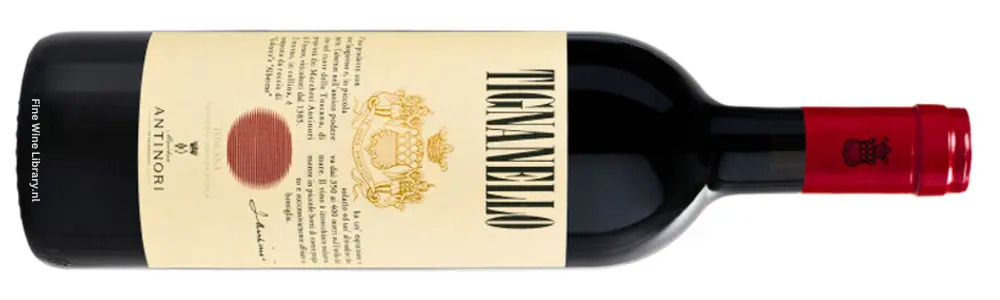
Tignanello
The flagship wine and one of Italy's most important bottles. A blend of approximately 80 percent Sangiovese, 15 percent Cabernet Sauvignon, and 5 percent Cabernet Franc from the Tignanello vineyard, it is a wine that combines the aromatic complexity and acidity of great Sangiovese with the structure and dark fruit depth of the Cabernet varieties. Consistent, age-worthy, and historically significant.
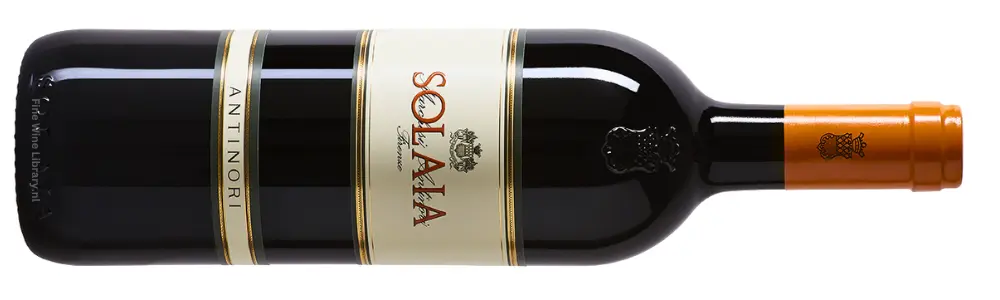
Solaia
Antinori's second great Super Tuscan from the same estate, Solaia reverses the varietal emphasis, it is a Cabernet-dominant blend of approximately 75 percent Cabernet Sauvignon, 20 percent Sangiovese, and 5 percent Cabernet Franc, produced from the Solaia vineyard adjacent to Tignanello. It is typically richer, more opulent, and more internationally styled than Tignanello, and is produced in smaller quantities, making it a highly sought-after collector wine.
Style and Character
Tignanello sits in a unique position among the Super Tuscans. Where Sassicaia is the most Bordeaux-like and classical, and Ornellaia the most opulent and richly fruited, Tignanello is the most distinctly Tuscan, the wine where Sangiovese's characteristic cherry fruit, dried herb, leather, and naturally high acidity are most clearly expressed, given depth and structure by the Cabernet component.
It is a wine of considerable elegance rather than brute power, and it rewards drinking from around eight years of age in accessible vintages, while the finest years, 2016, 2015, 2010, 2006, 2001, develop additional complexity and finesse over fifteen to twenty years.
Investment and Collectability
Tignanello is one of the most consistently collected Italian wines at auction and carries an historical importance that no other Super Tuscan can match. Its role in reshaping Italian wine gives it a cultural significance beyond its quality alone, and the combination of consistent production, strong critical recognition, and broad international demand makes it one of the most liquid Italian wines on the secondary market. Solaia, produced in smaller quantities, commands higher prices and is increasingly sought after by collectors as the sister wine of Tignanello.
Buy Tignanello Wines In Bond
All Antinori wines purchased through Fine Wine Library are held In Bond, excise duty free, with guaranteed provenance. Explore Tignanello and Solaia across current and back vintages.
Discover more from Tuscany, explore Sassicaia, Ornellaia, and Petrolo Galatrona, or browse all Italian wines.