
April 16, 2026
Chateau Latour vs Lafite Rothschild vs Mouton Rothschild
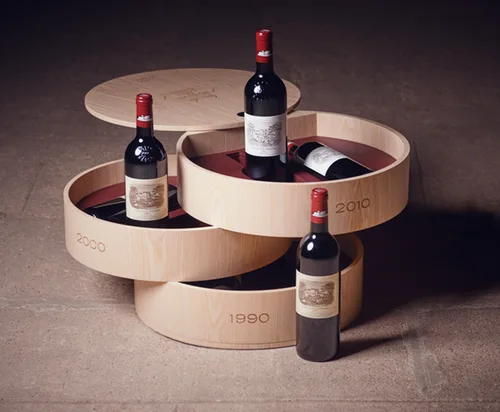
Three of the five Bordeaux First Growths sit within a few kilometres of each other in Pauillac. They are all classified at the very top of the 1855 system. They are all made predominantly from Cabernet Sauvignon, aged in new French oak, and built to last for decades. And yet anyone who has tasted all three seriously knows that Latour, Lafite, and Mouton are unmistakably different wines, different in character, in philosophy, and in what they offer the collector.
This comparison is not about ranking them. All three deserve their status. It is about understanding the differences clearly enough to know which belongs in your cellar, and why.
The Shared Foundation
Before exploring what separates them, it is worth acknowledging what they share, because the common ground is substantial.
All three estates sit on the deep gravel and clay soils of Pauillac, where the Garonne's ancient deposits create ideal conditions for Cabernet Sauvignon. All three benefit from proximity to the Gironde estuary, which moderates temperature and extends the growing season. All three have been under single, focused ownership through the modern era, Pinault at Latour, the Rothschild families at Lafite and Mouton respectively, with the kind of long-term institutional investment that First Growth terroir demands.
And all three are wines that reward patience above almost anything else in Bordeaux. None of them is at their best young.
The differences, then, are real but subtle in origin, rooted in variations of soil, vine age, blending philosophy, and above all in the aesthetic vision of the people making them.
Chateau Latour, Structure and Certainty
Chateau Latour is the most architectural of the three. Its wines are built, first and foremost, on the Enclos, a 47-hectare block at the southern tip of Pauillac whose soils are among the deepest and most gravelly in the Médoc. The result is a wine of uncommon structure: dark, tightly wound in youth, with tannins that take years to begin softening and a core of concentration that seems almost inexhaustible.
In great vintages, 2010, 2016, 2019, Latour produces wines that will outlast almost everything else in the cellar. The 1961, the 1970, and the 1982 are the canonical examples of what it eventually becomes: graphite, cedar, tobacco, dark fruit of extraordinary density, with a mineral backbone that never fully dissolves. It is, in short, a wine about time.
Latour is also the only one of the three that has left the En Primeur system, releasing wines in bottle when the estate judges them ready. This shapes the buying experience profoundly, you pay more at the point of purchase, but you receive a wine with complete provenance and in a state the château has validated.
The Latour collector tends to be the most patient. You are buying for twenty years hence, not five. Latour rarely flatters at ten years old. At twenty, in a great vintage, it becomes one of the most compelling things in Bordeaux.
Chateau Lafite Rothschild, Precision and Refinement
Where Latour leads with structure, Chateau Lafite Rothschild leads with finesse. The soils at Lafite, gently sloping gravel ridges over limestone and clay, produce a wine of extraordinary aromatic complexity and linear precision. This is the most refined of the Pauillac First Growths, and consistently the most aromatic.
Lafite in its youth shows a characteristic pencil shaving and cassis profile, delicate rather than dense, with a silkiness to its tannin structure that marks it apart from Latour's austerity. The oak is present but measured, the goal at Lafite has never been to overwhelm, but to support. Over fifteen to twenty years in a great vintage, it develops extraordinary length and layered complexity: cedar, graphite, floral notes, a finely tuned freshness that never quite fades.
The 1982, 1996, 2003, and 2010 are canonical Lafite vintages, each showing the estate's capacity for both power and precision at the same time. The 2016 is among the most celebrated recent releases.
Lafite is also the most internationally traded of the three, its name is perhaps the most recognisable in fine wine globally, which has historically supported strong secondary market pricing, particularly in Asian markets.
The Lafite collector values aromatic complexity and elegance over raw structure. If Latour is architecture, Lafite is music, a wine that rewards attention to detail more than it rewards sheer patience.
Chateau Mouton Rothschild, Opulence and Identity
Chateau Mouton Rothschild is the most individual of the three, in every sense. It is bolder and richer in style, with a generosity of fruit that makes it the most approachable of the Pauillac First Growths in relative youth. Where Latour demands patience and Lafite rewards careful attention, Mouton announces itself.
This partly reflects blending philosophy. Mouton typically maintains a higher proportion of Cabernet Sauvignon than the others, often in the high eighties or above, and the style seeks concentration and opulence over the tensile precision of Lafite or the austerity of Latour. The oak treatment is also bold: 100 percent new oak, which in Mouton's greatest vintages integrates into something seamless, but in lesser years can make the wine feel heavy before it has had time to settle.
Mouton also carries the most distinctive cultural identity of any wine on earth. Since 1945, the estate has commissioned a different artist for each vintage label, Picasso, Francis Bacon, Andy Warhol, Jeff Koons, and dozens more. It is a tradition that makes Mouton's bottles immediately recognisable and contributes something genuine to the wine's collectability: no two vintages look alike, and certain labels (the 1945 in particular) have become genuinely iconic cultural objects.
And then there is the history: Mouton was the only estate elevated within the 1855 Classification, moving from Second to First Growth in 1973 after years of lobbying by Baron Philippe de Rothschild. It remains the only reclassification in the system's 170-year history.
The Mouton collector often values the combination of bold flavour, cultural identity, and the wine's relative approachability. Mouton at twelve to fifteen years old is more rewarding than Latour at the same age. For collectors who want a First Growth that can be drunk with pleasure in a shorter window, Mouton is the natural choice.
Head to Head: Key Differences
In terms of style, Latour is structured, austere, and monumental, the most powerful and long-lived of the three. Lafite is refined, aromatic, and precise, the most elegant and linearly complex. Mouton is opulent, bold, and richly fruited, the most immediately expressive and approachable.
On drinking windows, Latour is the most demanding: expect to wait fifteen to twenty years before it begins to open, with a peak window running from twenty to fifty years or beyond. Lafite is slightly more generous, drinking well from around twelve to eighteen years with a peak window of eighteen to forty years. Mouton is the earliest of the three, often rewarding from ten to fifteen years of age and peaking somewhere between fifteen and thirty-five years.
On buying, Lafite and Mouton are both available through the En Primeur system, giving collectors early access at release pricing. Latour is not, it releases wines in bottle only, typically ten to fifteen years after harvest, at prices that reflect the wine's maturity and provenance.
Each estate also produces a second wine that offers a more accessible entry point to the same terroir. Latour's is Les Forts de Latour, Lafite's is Carruades de Lafite, and Mouton's is Le Petit Mouton.
Which Should You Buy?
There is no right answer, only the right answer for your cellar and your time horizon.
If you are building a collection that will not be opened for twenty years or more, and you want wines that will outlast almost anything else, Latour is the choice. It is uncompromising in its youth and extraordinary in its maturity.
If you value aromatic complexity and want the most internationally recognised name in fine wine, the one with the deepest and most liquid secondary market, Lafite is the natural cornerstone.
If you want a First Growth with cultural identity, bolder flavour in a shorter timeframe, and a wine that rewards collectors who enjoy the story as much as the glass, Mouton is compelling and unique.
Most serious collectors, over time, will have all three. The Pauillac First Growths are not really competing, they are complementary, and owning them side by side is how you come to understand what Pauillac, and Bordeaux, can really achieve.
Browse all three:
Chateau Latour Chateau Lafite Rothschild Chateau Mouton Rothschild
Read more:
All five Bordeaux First Growths compared Why Chateau Latour left En Primeur Explore all Pauillac wines