
May 21, 2024
Why Dom Pérignon Became the Ultimate Luxury Symbol
Category: Champagne, Dom Pérignon
Dom Pérignon is one of the rare wines that exists simultaneously in two worlds: the world of serious fine wine, where critics scrutinise it vintage by vintage and collectors build cellars around it, and the world of popular culture, where it functions as a shorthand for achievement, luxury, and celebration. Few bottles carry that dual weight with equal conviction. Understanding how Dom Pérignon arrived at this position — and why it maintains it — requires looking at both the wine itself and the cultural history that surrounds it.
The Wine Behind the Name
Dom Pérignon takes its name from Dom Pierre Pérignon, a Benedictine monk who served as cellar master at the Abbey of Hautvillers from 1668 until his death in 1715. His contributions to Champagne production were genuine and far-reaching: the development of blending techniques, the improvement of bottle strength and cork technology, and the pursuit of what he considered the perfect wine. The popular myth that he "invented" sparkling wine oversimplifies a more complex history, but his role in shaping the modern form of Champagne is real.
The modern brand was established by Moët & Chandon in 1936, when the first commercial release — the 1921 vintage — was launched as a prestige cuvée separate from the house's standard range. From the outset, Dom Pérignon was produced only in exceptional years, from only the finest vineyards, and with a commitment to extended ageing and quality that set it apart from most Champagne on the market. Those standards have remained consistent and have produced a body of work — across the standard vintages, the Plénitude releases, and the artist collaborations — that justifies its critical standing. For detailed vintage notes, see our Dom Pérignon vintage guide.
Presence in Music
Dom Pérignon's place in music — particularly hip-hop — is one of the more interesting cultural phenomena in the history of fine wine. Beginning in the 1990s and accelerating through the 2000s, the name became a recurring reference in chart-topping songs as a signifier of success and elevated living. Jay-Z, Kanye West, and many others used it specifically because it communicated something precise: not just wealth, but a particular kind of refined, aspirational luxury that required no further explanation to a global audience.
This did not happen by accident. Dom Pérignon's distinctive bottle shape, its association with celebration and special occasions, and the prestige of its Moët & Chandon parent all contributed to a recognisability that made it the natural choice when artists needed a single image to evoke the feeling of having arrived. The wine's actual quality — consistently high and well-reviewed — meant that the cultural reference was not simply superficial: there was substance behind the symbol.
Presence in Film and Television
Dom Pérignon's association with sophistication extends naturally to cinema. Its most famous screen appearances are in the James Bond franchise, where it has appeared since the earliest films as the preferred Champagne of the series' protagonist — an extension of the same shorthand that makes it useful in music, here serving to signal refinement, taste, and worldliness with a single image. The 1953 Fleming novel that originated the franchise establishes Bond's Champagne preferences as a defining character trait, and Dom Pérignon became the natural on-screen expression of that trait.
Artist Collaborations
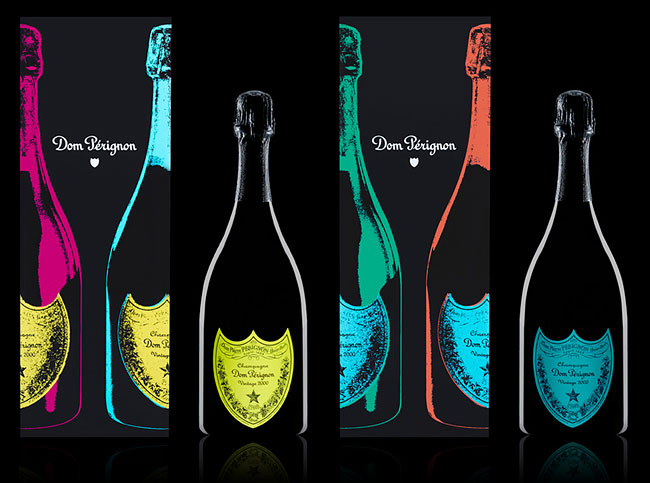
Dom Pérignon has formalised its presence at the intersection of fine wine and contemporary culture through a series of artist collaborations that have produced some of the most discussed luxury packaging of recent decades. The collaboration with Lady Gaga — resulting in a limited edition bottle reflecting her iridescent aesthetic — and the partnership with Lenny Kravitz, who served as creative director and contributed a hammered metal label design to the 2008 vintage, are among the most notable. These partnerships reflect the house's understanding that its appeal exists partly in the realm of cultural identity rather than wine appreciation alone, and they have introduced Dom Pérignon to audiences who might not otherwise have encountered it in a fine wine context.
Why the Dual Identity Works
The reason Dom Pérignon succeeds in both worlds — serious fine wine and popular culture — is that the substance backs up the symbol. It is not simply a well-marketed bottle. The wines genuinely age, genuinely develop, and genuinely reward the attention of informed collectors. The critical scores across multiple decades are consistently strong. The Plénitude releases — P2 and P3 — represent a serious and unusual commitment to exploring what extended ageing does to a great Champagne. When the culture reaches for Dom Pérignon as a shorthand for excellence, it is drawing on a reputation that the wine has earned through actual quality over nearly a century of production.
View all available Dom Pérignon vintages →
Related Reading
Dom Pérignon vintage guide | Dom Pérignon P2 and P3 explained | The history of Dom Pérignon