
Bordeaux En Primeur Guide
Bordeaux En Primeur: The Complete Guide to Buying Bordeaux Wine Futures
Next Campaign: Bordeaux 2025
Every spring, Bordeaux reveals its future.
Before the wines are bottled, before labels are printed, before the market fully forms an opinion, collectors and merchants travel to the châteaux, taste from barrel, and make decisions that shape cellars for decades.
Bordeaux En Primeur is not simply an early buying opportunity. It is the foundation of serious long-term Bordeaux collecting — and for many of the finest wines, it is the only realistic way to secure an allocation at all.
This guide explains how the system works, how pricing moves, what the real risks are, and how to approach En Primeur with a clear strategy.
What Is Bordeaux En Primeur?
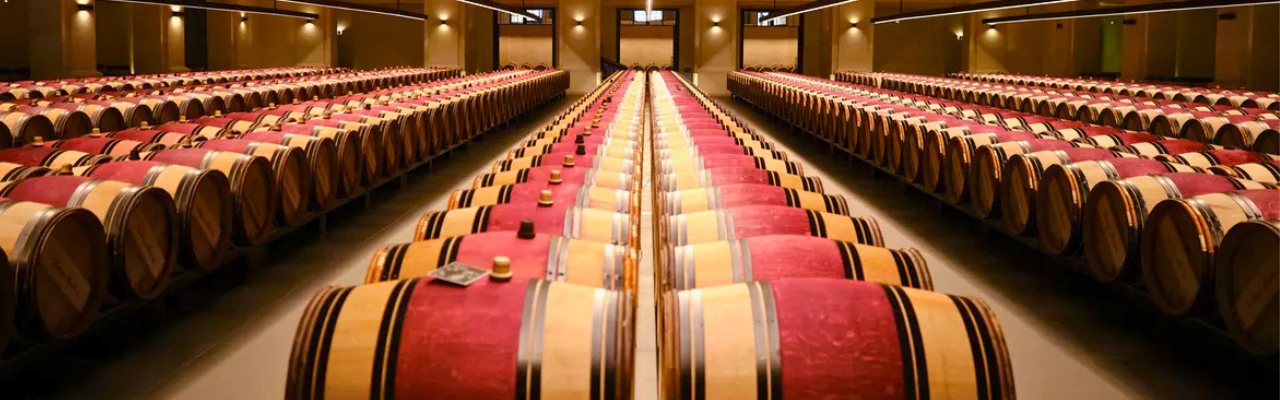
Bordeaux En Primeur — often called wine futures — is the system through which châteaux sell their wines while still ageing in barrel, typically 18 to 24 months before bottling and delivery.
Each April, the trade gathers in Bordeaux to taste barrel samples. These are unfinished wines. Blending decisions haven't been finalised. Yet the structure, tannin profile, fruit concentration and balance already reveal the character of the vintage with surprising clarity. Experienced tasters can tell within minutes whether a wine has the bones for 20 years of development.
Buyers commit based on that assessment. Payment is made upfront. Delivery follows roughly two years later, either into bonded storage or direct to your door.
The system has existed for generations. It remains central to how Bordeaux operates commercially — and to how the world's most serious collectors build their cellars.
Why Does Bordeaux Sell Wine En Primeur?
Historically, early sales gave châteaux cash flow to fund barrel ageing and vineyard investment. In return, merchants and collectors secured allocations of wines that would later become scarce or unavailable entirely.
That dynamic still holds. But En Primeur today is also about positioning. A strong campaign — well-received by critics, priced attractively against back vintages — generates momentum that carries a vintage's reputation for years. Châteaux know this. So do the négociants.
For collectors, the practical advantages are straightforward: early access to limited wines, release pricing before the secondary market forms, and direct provenance from château to bonded storage. For anyone serious about building verticals of leading estates, En Primeur is often the cleanest route.
At Fine Wine Library, we hold direct allocations through La Place de Bordeaux. During En Primeur week we travel to the region to taste extensively — our Bordeaux 2025 vintage report covers what we found this year across all the major appellations.
How Bordeaux En Primeur Works
Spring barrel tastings
In April, merchants, critics and négociants taste the new vintage across the Left and Right Bank. Wines are assessed from barrel — often multiple lots before final blending — and the picture that emerges shapes the entire campaign.
This is where terroir speaks most clearly. A cool gravel soil in Pauillac will express itself very differently from clay-rich slopes in Saint-Émilion. Vine age, canopy management, harvest timing — all of it shows through in structure and aromatic profile at this stage, even in an unfinished wine.
Critic scores and market reaction
Shortly after tastings, leading critics publish notes and scores. These have an outsized influence on demand, particularly for the First Growths and top Right Bank estates. A single high-profile score can move pricing on a wine within hours of publication.
The market then positions the vintage within historical context — how it compares to 2019, 2018, 2016 — and demand builds or softens accordingly.
Château releases
Châteaux release wines in tranches over a six to eight week campaign. Pricing reflects vintage quality, positioning against back vintages, and market appetite. The most sought-after wines often sell out within days of release. Some, within hours.
Bottling and delivery
Wines continue ageing in barrel for around 18 months before bottling. Delivery follows roughly two years after purchase — into bonded storage for most collectors, or direct shipment if you're planning to drink sooner.
How En Primeur Pricing Is Determined
Pricing is rarely arbitrary. It is a careful balance of vintage character, market positioning, and commercial reality.
Vintage quality is the foundation. Structure, tannin refinement, acidity and ageing potential assessed at barrel tasting determine confidence levels. A vintage with precise tannins and vibrant acidity commands different positioning than one defined by sheer ripeness, even if both are excellent.
Back vintage comparison drives buyer decisions more than almost anything else. If a new release is priced attractively relative to a mature vintage of similar quality, demand builds quickly. If it isn't, the market pushes back — and in recent years, it has done exactly that with some châteaux who misjudged this.
Global demand plays a role too: currency movements, appetite from Asia and the United States, and overall sentiment in the fine wine market all feed into where châteaux set their opening prices.
How to tell whether a wine is fairly priced — our complete guide to Bordeaux En Primeur pricing →
Is Bordeaux En Primeur Worth It?
For the right wines in the right vintages: yes. But it requires discipline.
The strongest case for buying En Primeur is scarcity. At the top estates — Pétrus, Lafite, Le Pin, Lafleur — allocations at release are genuinely limited. If you want them, En Primeur is often your only opportunity at a fair price. The secondary market for these wines is illiquid and expensive.
The second case is pricing. In great vintages that the market takes time to fully appreciate, En Primeur buyers lock in before prices adjust. The 2016 vintage is a clear example — bought well at release, it has appreciated significantly on the secondary market since.
The honest caveats: your capital is committed for two years. Barrel samples are not finished wines — though experienced tasters rarely find major surprises at bottling. And market prices can move against you, particularly in average vintages where châteaux overprice relative to quality.
The discipline is this: buy En Primeur when you want specific wines at specific estates, not as a general investment strategy applied to everything. Quality and scarcity, not vintage hype, should drive the decision.
Bordeaux En Primeur Timeline
The campaign follows a consistent annual rhythm:
September–October — Harvest across the Left and Right Bank
Winter — Barrel ageing begins; no public access to wines
April — Trade tastings; critics and merchants assess barrel samples
May–June — Price releases in tranches over six to eight weeks
~18 months later — Bottling
~2 years after purchase — Delivery into bond or direct shipment
Understanding this timeline matters for cash flow planning, especially if you're buying across multiple estates in a single campaign.
En Primeur vs Buying After Release
Both approaches have a place in a well-built cellar. The decision comes down to what you're trying to achieve.
Buying En Primeur makes sense when allocation is genuinely limited, when release pricing is attractive relative to back vintages, or when you're building a long-term vertical of a specific estate. The trade-off is a two-year wait and capital tied up before you receive the wine.
Buying after bottling makes sense when you want to drink sooner, when a vintage is widely available and hasn't appreciated, or when you want to assess the finished wine before committing. The trade-off is paying secondary market prices — often significantly higher for wines that performed well at barrel tasting.
A disciplined Bordeaux cellar usually contains both. En Primeur builds the long-term collection; post-release buying fills the near-term drinking window.
Bordeaux En Primeur by Appellation
Each appellation behaves differently during the campaign — in style, in pricing logic, and in where the value tends to sit.
Pauillac anchors the campaign. Three of the five First Growths sit here — Lafite, Latour, Mouton Rothschild — and their release prices set the tone for everything that follows. Gravel soils and Cabernet Sauvignon dominance produce wines of exceptional structure and longevity. In great vintages, nothing ages more gracefully. In weaker ones, they can feel austere young and overpriced.
Saint-Julien is where we consistently find compelling value. No First Growths, but an extraordinary density of Second Growths — Léoville-Las Cases, Ducru-Beaucaillou, Léoville Barton — that rival First Growth quality in the best years. Pricing rarely reflects this. Worth paying attention to every campaign.
Margaux is the most perfumed and aromatic of the Médoc communes. When conditions suit its style — cool nights, precise ripening — the wines have a floral elegance that nothing else in Bordeaux replicates. Château Margaux itself is extraordinary in great vintages; Palmer and Rauzan-Ségla offer serious quality at more accessible prices.
Saint-Estèphe is the appellation collectors underestimate. Cos d'Estournel and Montrose consistently perform above their official classification. Clay-influenced soils produce wines with real grip and longevity. Often the best value on the Left Bank.
Pessac-Léognan sits just south of the city and operates somewhat outside the Médoc rhythm. Haut-Brion and La Mission Haut-Brion are among the most consistent estates in Bordeaux across all vintages. The appellation also produces Bordeaux's finest dry whites — worth including in any serious En Primeur allocation.
Saint-Émilion is large and varied. The plateau calcaire around the town produces the finest wines — Cheval Blanc, Angélus, Canon. The lower-lying areas can be less consistent. Pay attention to producer reputation here more than appellation alone.
Pomerol is tiny, unclassified, and home to some of the most tightly allocated wines in the world. Pétrus, Le Pin, Lafleur — if you want them, En Primeur is your best opportunity. The clay soils produce wines of extraordinary texture and depth, often more approachable young than their Left Bank counterparts.
Bordeaux Vintage Reports
Each year during En Primeur week, we travel to Bordeaux and taste extensively across the region — visiting châteaux across Pessac-Léognan, Saint-Émilion, Pomerol, Margaux, Pauillac, and Saint-Julien. Our vintage reports cover overall vintage character, appellation breakdowns, standout wines, and our buying recommendations.
Bordeaux 2025 Vintage Report → Bordeaux 2024 Vintage Report →
Building a Bordeaux Cellar Through En Primeur
A well-built Bordeaux cellar isn't assembled in a single campaign. It takes time — layering purchases across vintages, balancing Left Bank structure against Right Bank richness, buying depth in exceptional years and exercising restraint in average ones.
En Primeur is the mechanism that makes this possible. It gives you access to wines at fair prices before the market prices in their full potential. It provides provenance that matters when you eventually sell or share the wines. And it creates a discipline — a reason to engage with each vintage on its merits rather than reacting to secondary market prices years later.
If you're new to En Primeur and want to understand where to start, speak to us directly. We hold La Place de Bordeaux allocations and can walk you through the current campaign.
Frequently Asked Questions
For detailed answers on pricing, delivery timelines, storage, duty and import, and the risks of buying futures, visit our dedicated Bordeaux En Primeur FAQ.